Wall and drywall water damage repair in Attleboro, MA starts with a look inside the wall. Water gets into a wall from a leaking pipe in the cavity, a window or roof leak above, a floor flood that wicks up the base or a bathroom or kitchen on the other side. The surface often shows only a small part of it.
Drywall is paper-faced gypsum, and it loses strength when wet, then crumbles. Plaster over lath behaves differently and may dry slowly without falling apart. The treatment differs, so the first step is identifying what the wall is made of.
Signs of a wet wall
- Bubbling or peeling paint, or a stain that grows after rain or after the shower runs.
- A wall that feels cool or damp, or drywall that crumbles at the base.
- Baseboards that swell or separate from the wall.
- A musty smell that is strongest at one wall.
- A wall that dried on the surface but stains again.
Drywall, plaster and insulation
| Material | Wet behavior | Usual approach |
|---|---|---|
| Drywall | Softens, crumbles, supports mold on the paper | Cut out the wet section, dry the cavity, replace the board |
| Plaster and lath | Holds water, dries slowly, can stain | Dry in place when possible, repair cracks and finish |
| Fiberglass insulation | Sags and holds water against framing | Remove if saturated, replace after drying |
| Wood studs and plates | Absorb water and release it slowly | Dry to a measured level before closing |
Water that traveled behind a wall can be much larger than the stain on the face.
How a wet wall is dried
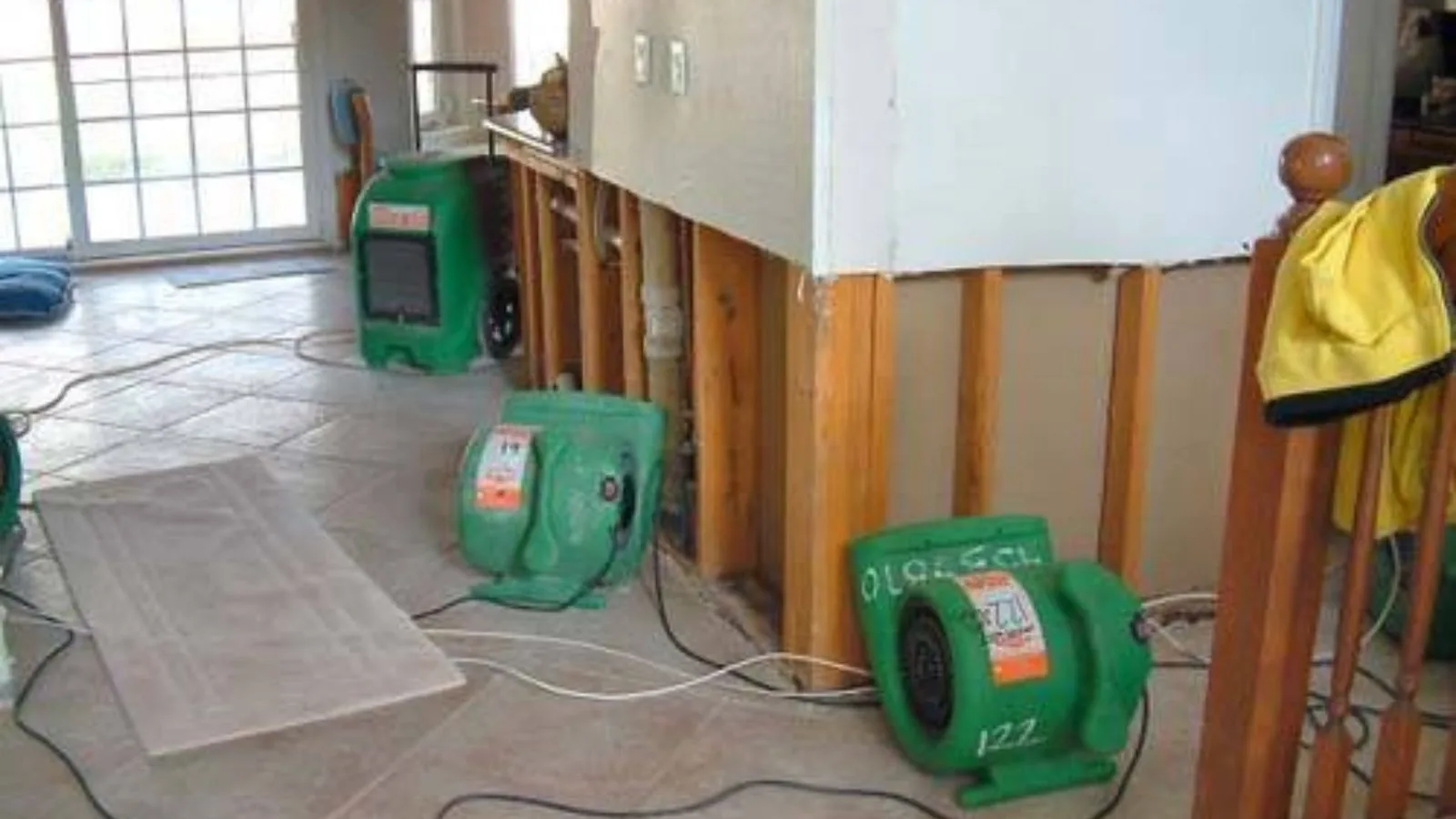
The crew uses a meter and a thermal camera to map the wet area, then removes the bottom strip of wet drywall, often about two feet up from the floor, so the cavity can be opened to air. Drying equipment pushes dry air into the cavity or uses panels to draw moisture out.
Where drywall must come out, the crew cuts clean, straight lines that make repair easier. The wall stays open until readings show that framing and insulation are dry, and then it is closed and finished. The drying approach follows the structural drying process.
Stain growing on the wall?
Call and describe the room, the stain and what you have already tried.
Wall and drywall jobs are taken in Attleboro and in North Attleboro, Norton, Mansfield and Seekonk, and in North Dighton as well.
Wet walls show up in many places. A garage wall with drywall that has gone soft, a kitchen wall that has taken water from a siding leak, a bathroom wall with a spreading stain and a hole forming at the baseboard are all common. Each one is checked for moisture first, since the wall can be wet well beyond the stain.
What to do about a wet wall
Switch off power to circuits that run through the wet wall if you can do so from a dry spot, and do not drill into a wall that is holding water near wiring.
Move furniture back from the wall, take photos of stains and bubbling paint, and mark the edge of the wet area with a pencil so the crew can see if it spreads.
ANSI/IICRC S500 is the reference for testing and drying wet wall assemblies.
Why the cut line matters
A clean, level cut makes patching easier and lets the new board bond well. Cutting above the wet line prevents hidden moisture from being closed up behind the repair. The crew often cuts to the nearest stud and leaves the opening exposed until readings confirm that framing is dry.
Texture and paint matching is a finishing task that comes after drying. Matching an old plaster texture can take more skill than drywall patching, so the scope should say who does it.
Mold on walls
Paper facing on drywall is a food source for mold when it stays wet. Wet walls that are not dried promptly can develop growth in the cavity where no one can see it. If growth is already visible, the mold remediation page explains what the work involves.
Painting over a wet wall does not dry it, and it hides the sign you are watching for.
What affects the scope
| Factor | How it changes the job |
|---|---|
| Wall material | Drywall and plaster are treated differently. |
| Height of water | The wet line shows how much board is cut out. |
| Insulation | Wet insulation is removed and replaced. |
| Finish work | Taping, texture and paint follow once the wall is dry. |
| Source repair | A plumber or roofer fixes the cause first. |
A written scope with the price comes first. Call (833) 521-1033 with questions.
Insurance and wall repair
Photos of the stain, the opened wall and moisture readings help the claim. Coverage depends on the cause, so ask your insurer, and keep receipts for the plumber or roofer who fixed the source.
Plaster and older walls in Attleboro
Houses built before the mid twentieth century often have plaster over wood lath, and the Massachusetts Historical Commission survey describes much of that housing stock across the city. Plaster walls resist small leaks better than drywall but can fail where moisture lingers.
Wall repairs after a leak follow the same drying rules in North Attleboro, Plainville and Mansfield and in North Dighton. A wet wall below a bathroom or roof is also explained on the ceiling page, and wall water from a pipe is covered on the burst pipe page.
Common questions
Does wet drywall always have to be replaced?
Not always. Lightly wet board that dries quickly can sometimes stay. Saturated or crumbling board, and board with mold growth, is replaced.
Can I just paint over a water stain?
Not before the wall is dry and the source is fixed. Paint hides the stain and can trap moisture.
Why is the bottom of the wall cut out?
Water wicks up from the floor and sits behind the baseboard. Removing the bottom strip opens the cavity so it can dry.
How do I know if the wall is dry?
A moisture meter reading compared to a dry reference confirms it. Touch alone is not reliable.