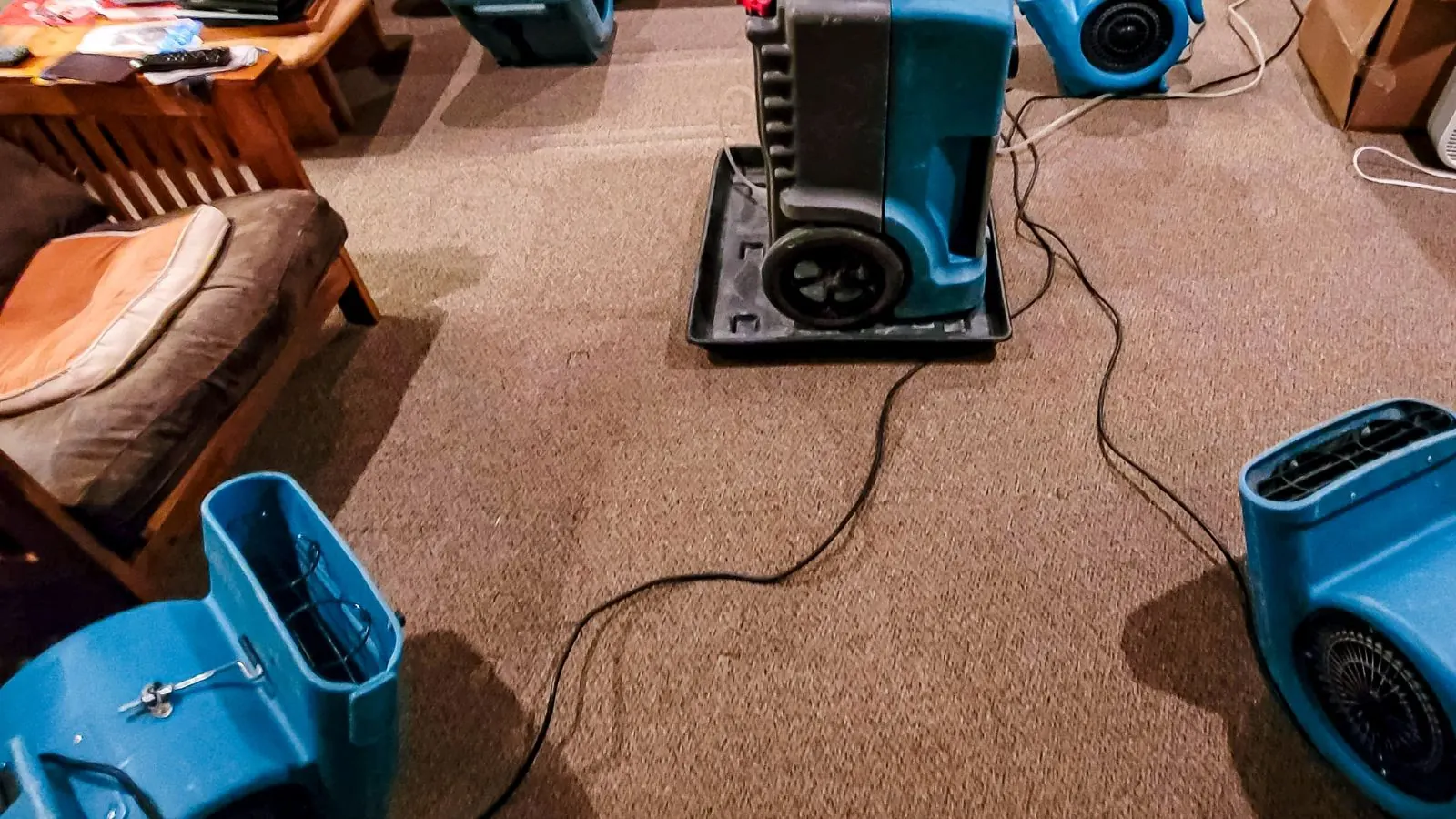
Structural drying and dehumidification in Attleboro, MA is the stage after the water is removed. It dries the structure itself, the framing, subfloor, drywall, plaster and insulation, using controlled airflow and moisture removal until readings match a dry standard.
This is also where the term water mitigation belongs: stopping the damage from spreading while the building dries. The homepage covers the whole sequence, and this page explains the drying step in detail.
Wet walls and a damp smell: where drying starts
Most people reach this page with a symptom: a wall that feels cool and damp, a floor that stays soft, a room that smells musty days after a leak was fixed. Those are signs that water is still in the structure, and fans and open windows rarely finish the job.
Drying is a specific trade skill. Equipment is chosen and placed by the amount of water in each material and the volume of air in the room, and readings are checked every day or so until the building is dry.
Moisture mapping
A drying job begins with a map. Moisture meters measure wood, drywall and concrete at many points, and thermal imaging shows cool, wet areas behind finishes. The crew marks wet zones, records starting readings and sets a dry goal for each material.
The map matters because water travels. A wall that looks fine on the face can be wet at the base behind the baseboard, and a ceiling can be dry on the surface and wet in the insulation above.
Equipment and what it does
| Equipment | What it does | Where it is used |
|---|---|---|
| Air movers | Push air across wet surfaces to speed evaporation | Floors, wall bases, carpet, cavities |
| LGR dehumidifiers | Remove moisture from the air so more can evaporate from materials | Whole rooms and sealed work areas |
| Specialty drying panels | Force dry air into wall and floor cavities | Hardwood floors, walls behind cabinets |
| Moisture meters and thermal camera | Measure and map what is wet | Every job, every visit |
Equipment runs on electricity and creates heat and noise, so the crew explains the setup and the number of circuits needed.
How drying is monitored
A drying log records temperature, relative humidity and material readings at each visit. EPA guidance suggests indoor humidity of roughly 30 to 50 percent as a healthy range, and a drying room is run lower than normal living conditions while the job is active. Equipment is adjusted or removed based on the numbers, not a fixed number of days.
The drying process connects to every other water damage page. Extraction comes before it, and the finish questions after it appear on the wall and drywall, hardwood floor and carpet pages.
Ready to plan a dry-out?
Call and describe which rooms were wet and what the surfaces are.
Before the equipment arrives
Keep wet rooms closed, turn off any ceiling fixture that is holding water, and keep people away from wet outlets. Do not run a household fan across a wet wall, since it can push moisture into dry rooms.
Write down which rooms are wet and when the leak was stopped. Drying records start with that timeline.
Drying goals and monitoring practice come from ANSI/IICRC S500.
Signs that drying was cut short
A musty smell that returns, baseboards that stay cool to the touch, paint that bubbles weeks later and floors that cup after a repair are signs that moisture was left behind. Ask the crew for the final readings and compare them to the dry reference they recorded.
If the equipment was removed without readings, ask for a visit with a meter before walls are closed or floors are finished.
What affects drying time and cost
| Factor | How it changes the job |
|---|---|
| Material | Dense materials like hardwood and plaster dry slower than carpet. |
| Starting moisture | Saturated framing takes longer than lightly damp board. |
| Room volume | Larger spaces need more dehumidification capacity. |
| Conditions | Humid weather slows evaporation and adds equipment time. |
| Monitoring visits | Each check adds a record that shows when drying is finished. |
A scope with the price is explained first. For a plain answer on a specific building, call (833) 521-1033.
Insurance and the drying record
A drying log with photos, readings and equipment records is useful documentation for an insurance claim. Coverage depends on the cause of the loss and your policy, and your insurer decides what applies, so keep the paperwork and ask.
Drying older buildings around Attleboro
Plaster and lath, thick framing and old brick behave differently from modern drywall. The Massachusetts Historical Commission survey describes mill buildings in Dodgeville and Hebronville and older houses across the city, and drying a masonry or plaster wall takes longer and more patience than drying a thin modern partition.
Drying standards do not change at the city line, so the same plan applies in Plainville, Norton and Seekonk and in North Dighton. For mill-area buildings, the Dodgeville page has local detail.
Common questions
How long does structural drying take?
It depends on materials, moisture level and conditions. Many jobs run several days, and the readings decide when equipment comes out.
Can I dry a wet room with box fans and a household dehumidifier?
For a damp surface, possibly. For water inside walls, subfloors or insulation, household equipment usually cannot reach or measure it.
Why does the equipment run so long?
Water in framing and subfloors leaves slowly. Stopping early leaves moisture behind, which supports mold and rot.
What is a drying log?
A record of readings, humidity and equipment at each visit. It shows when materials reached a dry standard and can support an insurance claim.
Do you rent out air movers and dehumidifiers?
No. Drying equipment is placed, checked and removed by the crew as part of the job, so the readings and the equipment stay under one plan.