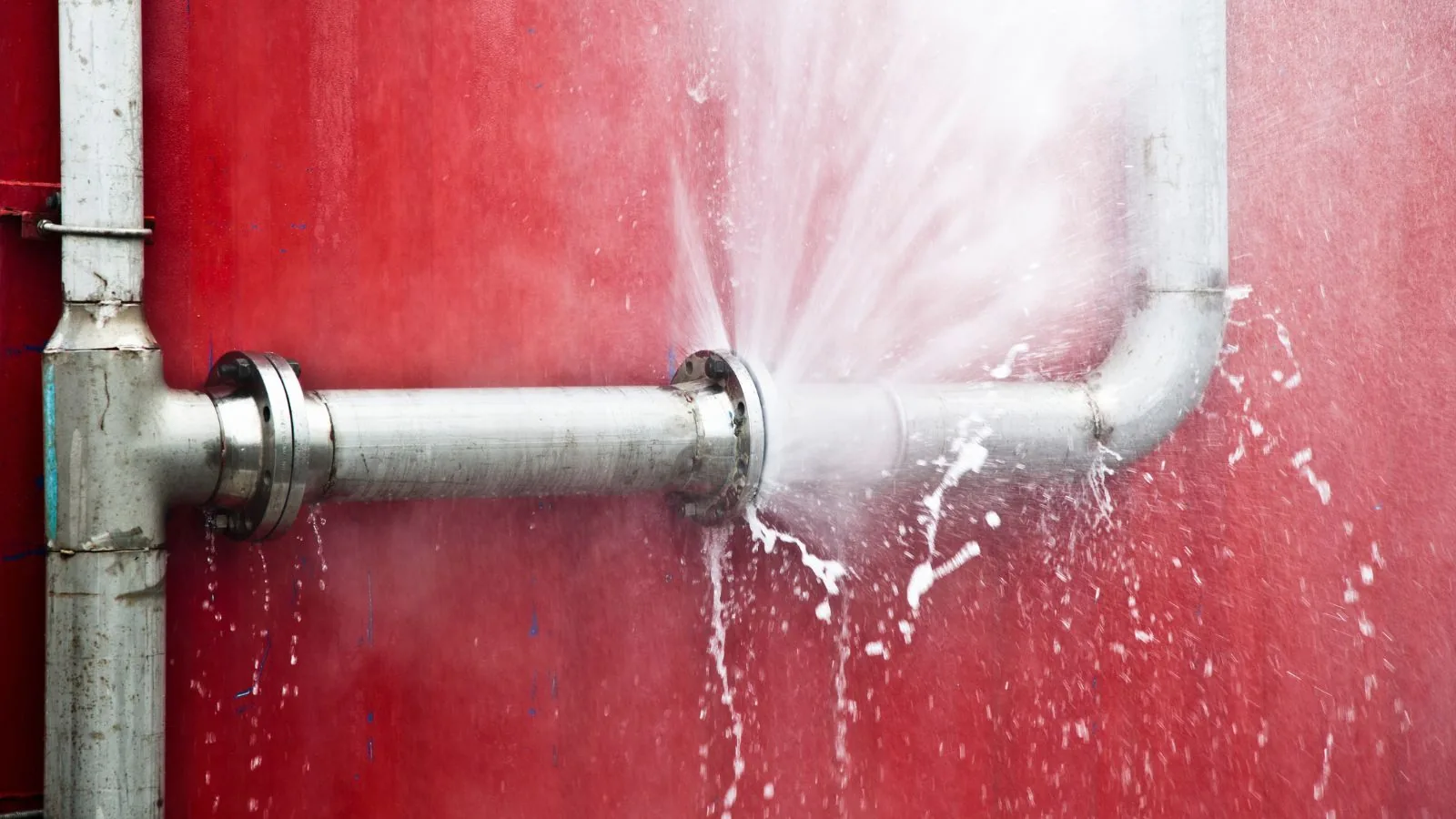
Burst pipe water damage in Attleboro, MA starts with a supply line under pressure, usually somewhere between 40 and 80 psi, that has split open and is pushing water into a wall, ceiling or floor. Unlike a slow drip, a burst line can release a bathtub of water in minutes and keeps going until the valve is closed.
The phone line is open 24/7. The cleanup that follows is straightforward in principle: stop the flow, remove the water, open what is wet and dry it with monitored equipment.
What to do: first steps when a pipe lets go
Find the main shutoff, usually where the water line enters near the meter or the basement wall, and turn it clockwise until the flow stops. Open a low faucet to drain the lines. If water is falling through a light fixture or near the panel, stay out and call the utility or 911 before anything else.
Photograph the burst section if it is visible and keep the failed piece of pipe. A plumber repairs the line, while the restoration crew handles the water it released.
The ANSI/IICRC S500 standard is the industry reference for how supply line water is classed and dried.
When a burst pipe is an emergency
Water from a supply line is Category 1 at the start, which is the most forgiving category under ANSI/IICRC S500. That window closes. Water that soaks insulation, sits in a wall cavity or reaches a basement drain can be reclassified as it ages, and carpet and drywall that could have been dried in place may then have to be removed.
Hidden bursts are the expensive ones. A line inside a wall behind a bathroom can run for hours before a stain shows on the room below, which is why a ceiling that suddenly sags or a floor that feels warm and damp deserves an immediate call.
How the cleanup works
The crew traces the water with a moisture meter and thermal camera, since the wet area is often larger than the visible stain. Wet drywall below the break is usually cut out in a straight line a short distance above the highest reading so the cavity can dry. Insulation that has absorbed water is removed because it holds moisture against framing.
Air movers and low-grain refrigerant dehumidifiers then run until readings return to the dry standard for that material. Structural drying is logged day by day, so the end of the job is a set of numbers instead of a guess.
Bursts that look different
- A split in a copper line inside a kitchen wall tends to affect kitchen cabinets and the floor below.
- A failed fitting above a finished ceiling shows up as the stain, bulge or drip covered on the ceiling water damage page.
- A pipe that split because of ice follows a different logic, which the frozen pipe page explains.
Valve closed, water everywhere else?
Call now and describe where the water ended up so cleanup can be sequenced.
What shapes the scope of a burst pipe job
| Factor | How it changes the job |
|---|---|
| Run time | Minutes of flow mean a localized job, hours mean multiple rooms and floors. |
| Wall and ceiling construction | Plaster and lath dry differently from drywall. |
| Floors affected | Hardwood, laminate and carpet each need their own drying method. |
| Drying days | Equipment is billed by the days it takes to reach dry readings. |
| Rebuild work | Replacing drywall, trim and paint is a separate stage from the cleanup. |
Scope and price are explained before work starts, and (833) 521-1033 answers questions about what a typical job involves.
Insurance for burst pipes
Sudden and accidental pipe failure is the kind of water loss homeowners policies commonly address, while long-term seepage often is not. Massachusetts Division of Insurance guidance asks policyholders to report a claim to the insurer as soon as possible and to take reasonable steps to limit further damage, and to keep receipts. Check your policy for the exact terms.
Where burst pipes meet Attleboro housing
The Massachusetts Historical Commission survey of Attleboro describes triple-deckers and two-family houses east of the center, mill worker housing in Dodgeville and Hebronville, and later streetcar-era houses in South Attleboro. Houses of those periods often have plumbing that was altered more than once, so the line that fails is frequently a repair joint or an old fitting rather than the original pipe.
Calls come in from Attleboro and from North Attleboro, Norton, Mansfield, Seekonk and Plainville, and a burst line in North Dighton is handled the same way. If the water has already reached a lower floor, water extraction usually starts before drying.
Common questions
Do you handle burst pipe emergencies at night or on weekends in Attleboro?
Yes. The line is staffed around the clock, and a burst pipe at 2 a.m. gets the same questions as one at noon: where the valve is, where the water went, and whether any electrical equipment is involved.
Should I call a plumber or a restoration company first?
Close the main valve first. A plumber repairs the pipe and a restoration crew removes and dries the water, so most homes need both. Calling the restoration line early lets drying be planned while the plumber works.
How do I know the water behind the wall is gone?
You cannot judge it by touch or sight. Moisture meters and thermal imaging find water inside cavities, and drying logs show when readings reach a dry standard.
Can a burst pipe cause mold?
Mold needs moisture, and wet building materials that stay damp past the first 24 to 48 hours give it that. Fast removal and monitored drying reduce the chance, and nobody can promise that mold will not appear.