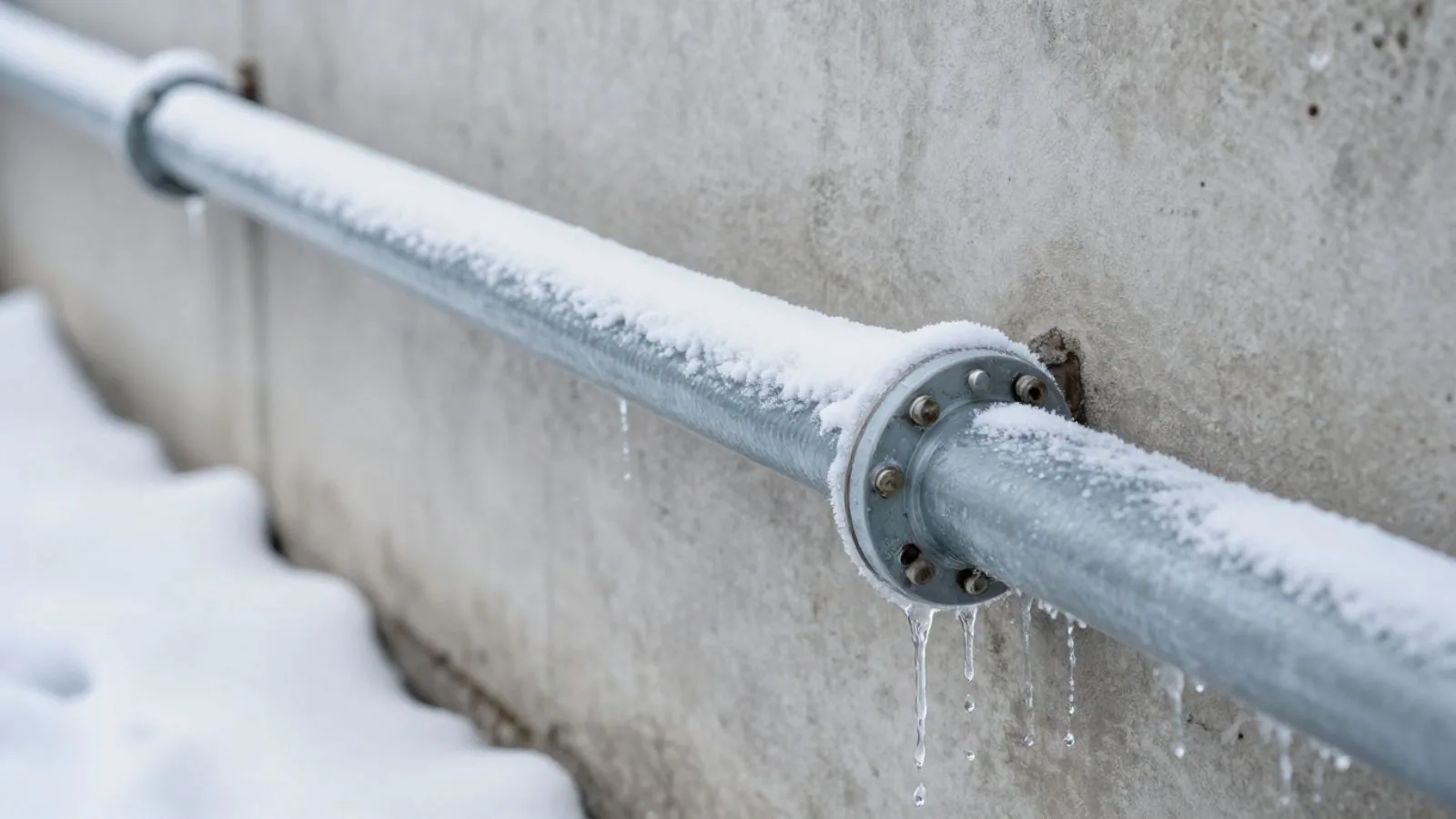
Frozen pipe water damage in Attleboro, MA usually shows up after the weather turns, not during the coldest night. Water expands by about 9 percent as it freezes, the pipe stretches or splits, and the split stays plugged with ice until the temperature climbs and the plug melts.
That is why a house can sit quiet at 15 degrees and then flood at noon when the sun reaches an exterior wall. The 24/7 phone line takes thaw-time calls the same way it takes any other emergency.
What to do: if you suspect a freeze
If a faucet runs slowly or not at all in cold weather, shut the main valve now and leave the faucet open. Do not use a torch or open flame on a pipe. A hair dryer or warm towels on an exposed section is the safe approach, and only with the main valve already closed.
If water is already moving through a ceiling or wall, shut off the main, keep clear of wet electrical fixtures and call the 24/7 line.
Drying after a thaw follows ANSI/IICRC S500, which also covers when wet insulation should be removed.
When a frozen pipe is an emergency
Pipes freeze most often in unheated spaces such as exterior walls, attics, garages, crawl spaces and the runs behind kitchen sinks on outside walls. A split that thaws inside a wall behind plaster or drywall can release water for hours before anyone sees it.
The Massachusetts Division of Insurance notes that policies may expect reasonable steps to keep the house heated or to shut off and drain the water. Taking those steps and documenting them matters if a claim follows.
How the water damage is handled
The first job is finding every wet surface, because the failure point is often several feet from the stain. Thermal imaging and moisture mapping trace the path from the split through insulation, framing and finished surfaces.
Wet insulation and drywall are removed back to dry material, the cavity is opened to air and drying equipment runs until the readings are dry. If the pipe split in a space that also holds crawl space moisture, the vapor conditions are checked at the same visit.
Close the main
Stops the flow and lets the lines drain.
Find the split
Moisture mapping traces water past the stain.
Open and dry
Wet insulation and board out, equipment in.
Verify
Readings logged until the cavity is dry.
Frozen pipe, ice dam or roof leak?
Winter water inside a house has more than one source. A split pipe leaks from the plumbing, an ice dam pushes meltwater under shingles, and a roof opening lets in rain or snowmelt. The ceiling page covers stains that come from above, and the burst pipe page covers lines that fail under pressure for other reasons.
Thawing and leaking right now?
Call and say which wall or ceiling the water is coming through.
What affects the scope
| Factor | How it changes the job |
|---|---|
| Where the pipe ran | Exterior walls and attics hide water longer than basement runs. |
| Hours of leaking | Longer leaks mean more wet insulation and framing. |
| Finish type | Plaster, drywall and paneling are removed and dried differently. |
| Floors below | Water that travels down affects ceilings and floors on the next level. |
| Rebuild | Insulation, board and paint come after the structure is dry. |
The scope is written and explained before work starts. A call to (833) 521-1033 is the quickest way to find out what your situation involves.
Insurance and winter losses
Burst pipes from freezing are a common homeowners claim, and the cause matters, because a loss from a house left unheated may be handled differently from one in an occupied home. Keep photos, receipts for emergency steps and the failed pipe section, and ask your insurer what your policy requires.
Cold and old houses in Attleboro
Winters in southeastern Massachusetts swing above and below freezing often enough to cycle a thaw, and older houses with additions, porches and converted attics have many exposed runs. The Massachusetts Historical Commission survey describes Attleboro as a city of mill housing, Queen Anne houses and early twentieth century cottages, and in that kind of housing the cold spots are usually where an old wall meets an addition.
Pipe failures here get the same phone response in North Attleboro, Plainville, Norton, Mansfield and Seekonk, and in North Dighton. The nearest neighborhood detail is in Hebronville, where the survey lists mill worker cottages and Greek Revival and Italianate houses.
Common questions
Do you handle frozen pipe emergencies at night or on weekends in Attleboro?
Yes. Thaw leaks happen on cold nights, holiday weekends and the first warm afternoon after a freeze, and the line is open for all of them.
Why did the pipe flood the house after it warmed up?
The ice plug can hold a split closed. When the ice melts, water pushes through the opening at normal pressure, so the leak begins during the thaw.
Is it safe to thaw a frozen pipe myself?
Only with the main valve closed and with a low-heat method like a hair dryer. Open flames are a fire risk, and a pipe that already split will leak as soon as it thaws.
Will insurance cover a pipe that froze?
Often yes for a sudden failure, with conditions about heating the home or draining the system. Read your policy and ask your insurer, because terms differ.