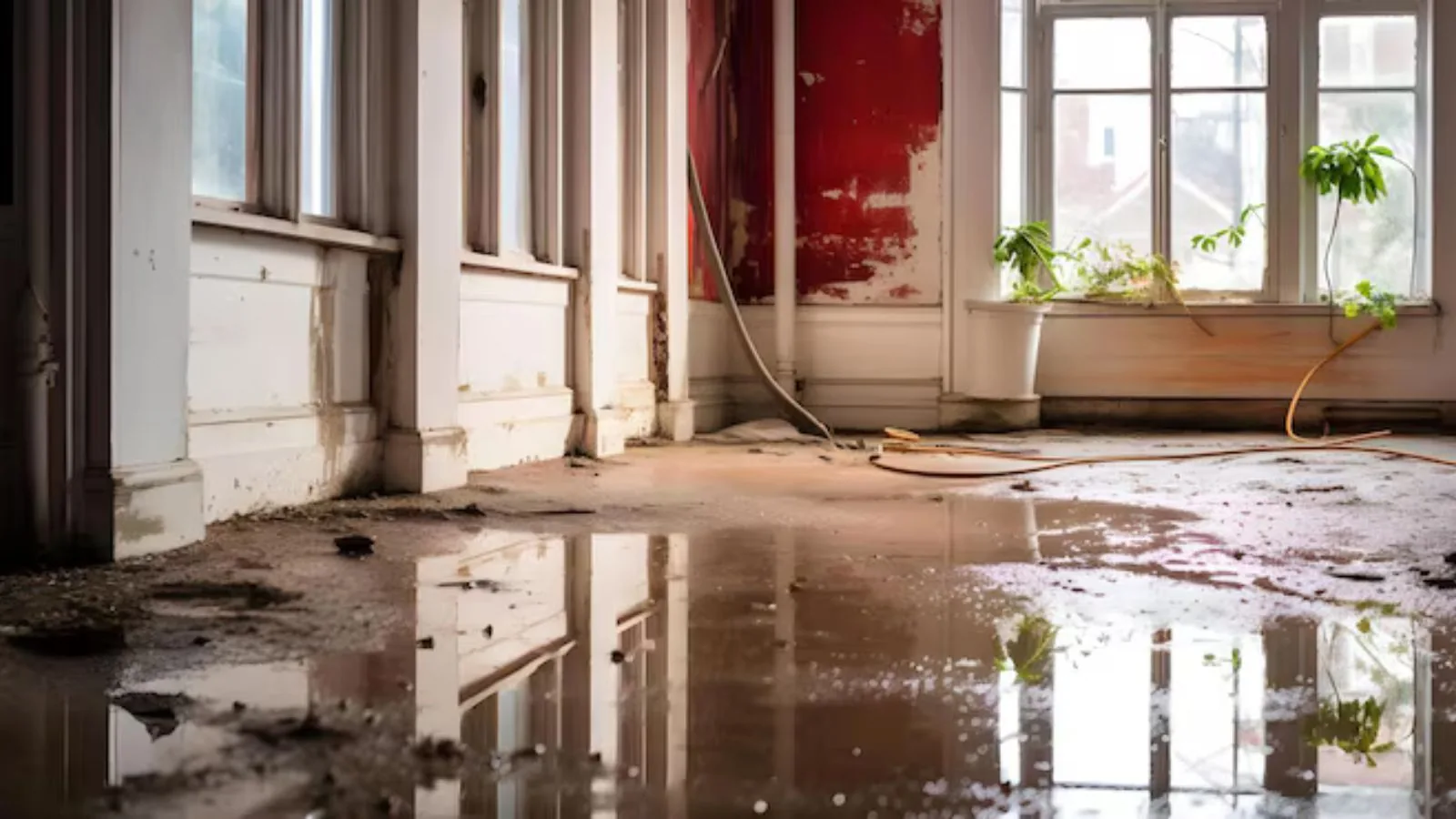
Flood damage cleanup in Attleboro, MA covers water that came from outside the plumbing: a river over its bank, groundwater rising through a basement floor, or surface runoff pouring through doors and window wells. Under ANSI/IICRC S500, flood water is treated as Category 3, grossly contaminated, from the start.
The line is open 24/7. If the water is deep, moving or near electrical equipment, make sure everyone is out and call 911 or the utility before the restoration line.
What to do: flood water safety
Do not walk into standing water where outlets, cords, the panel or a furnace may be live. Do not run a household vacuum or fans in it. Children and pets stay out of the area.
Wear waterproof boots and gloves for anything you must touch, wash with soap and clean water afterward, and plan to discard food and anything porous that was submerged.
Flood water is treated as contaminated under ANSI/IICRC S500, which drives what is removed and how it is cleaned.
When flood water is an emergency
Contamination does not wait. Flood water that has soaked carpet, pad, drywall and insulation is a health and structural problem within a day, and building materials that stay saturated lose strength and grow mold. The EPA advises drying within 24 to 48 hours wherever it can be done safely.
Flood water is also heavy and silty. A quarter inch over 1,000 square feet is about 156 gallons, and a flooded basement can be many times that volume, which is why pumping happens in stages so the surrounding soil and the foundation are not stressed by emptying too fast.
What happens on a flood job
Crews pump out the water, then remove materials that cannot be cleaned: carpet and pad, drywall below the waterline, wet insulation and often baseboards. Hard surfaces and framing that can be saved are cleaned and treated with an antimicrobial before drying begins.
Containment keeps debris and contaminated dust away from clean rooms. After removal, air movers and dehumidifiers run on a documented schedule, and moisture readings are logged until the structure reaches a dry standard.
- Pumping and bulk extraction, covered in more detail on the water extraction page.
- Removal of porous materials that flood water has reached.
- Cleaning and antimicrobial treatment of what stays.
- Monitored drying under the structural drying process.
Water is still coming in?
Tell the dispatcher where it enters and how deep it is.
Flood or storm damage: which page applies
This page covers rising water. When wind and rain damage the building envelope, such as a failed roof section or a blown-in window, the storm water damage page describes that loss, and a below-grade room that takes on seepage is covered under basement water cleanup.
What shapes a flood job
| Factor | How it changes the job |
|---|---|
| Depth and duration | Longer contact means more material to remove. |
| Water category | Flood water starts at Category 3 and needs protective gear and treatment. |
| Square footage affected | Larger areas multiply pumping, removal and drying. |
| Contents | Furniture and belongings are sorted into salvage and discard. |
| Rebuild scope | Replacing board, flooring and trim follows the dry-out. |
A written scope with the price is explained before work begins, and (833) 521-1033 is the place to ask what applies to your property.
Insurance and flood coverage
The Massachusetts Division of Insurance states that standard homeowners and commercial policies do not cover flood damage, and that flood coverage is bought separately, through the National Flood Insurance Program or a private insurer. Some policies carry a sump pump failure or water backup endorsement. Check your declarations page and ask your insurer what applies.
Flood risk around Attleboro
Attleboro lies along the Ten Mile River, fed by the Bungay River, and Manchester Pond Reservoir sits in the city. A rain event in March 2010 that the National Weather Service describes as two-day totals of 6 to 10 inches across Rhode Island and eastern Massachusetts produced record flooding across the region. It is a reminder that heavy rain on saturated ground reaches this area.
That is regional history, not a claim about any one street. To see whether a property touches a mapped flood hazard area, check the FEMA Flood Map Service Center for the address, and ask the city building department about local requirements. Crews respond to Attleboro, North Attleboro, Norton, Mansfield, Seekonk and Rehoboth, and to North Dighton, a mill village on the Three Mile River.
Common questions
Do you handle flood emergencies at night or on weekends in Attleboro?
Yes. The phone line is open 24/7 and flood calls are taken at any hour. Say whether the water is still rising and whether power is on in the affected area.
Is flood water really that different from a leak?
Yes. Flood water carries soil and bacteria from outside, so it is classed as Category 3 and handled with removal of porous materials, cleaning and protective gear.
Does homeowners insurance cover flooding?
Standard homeowners policies in Massachusetts generally do not cover flood damage. Separate flood coverage exists, and some policies add endorsements for sump pump or water backup. Ask your insurer.
How do I find out if my property is in a flood zone?
Use the FEMA Flood Map Service Center and search the address, or ask the Attleboro building department. Flood maps cover mapped areas only, and a property outside them can still flood.