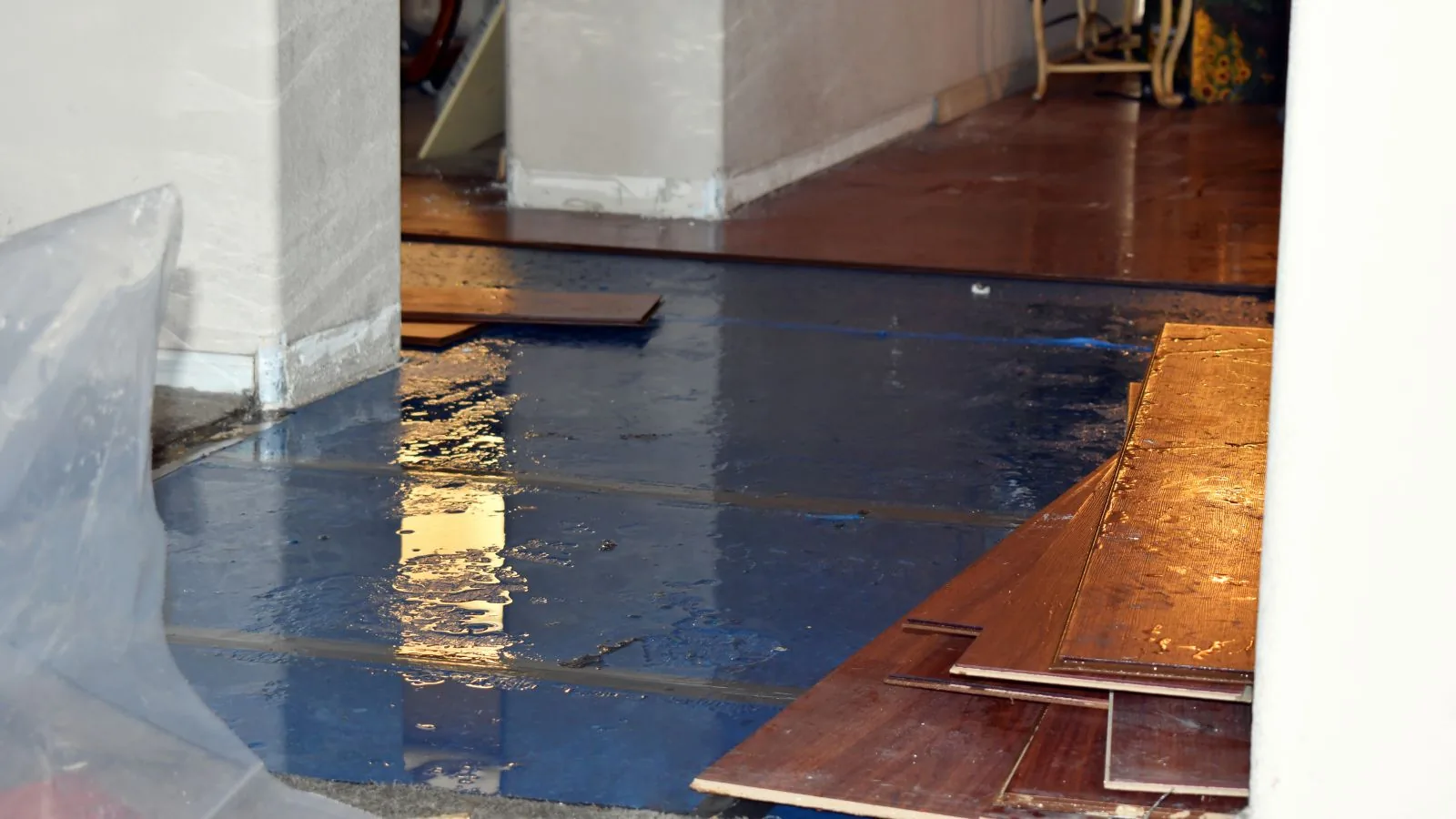
Emergency slab leak water damage in Attleboro, MA concerns water from a pressurized line that runs in or beneath a concrete slab and has started to leak. The line can be copper, plastic or galvanized, and the water travels through cracks and joints and surfaces as a damp spot, a hot patch on the floor or a flooded corner of a room.
The restoration side begins once the supply is shut off. A plumber locates and fixes the leak, and the crew dries and repairs the flooring and walls the water reached. The phone line is open 24/7.
Slab leak, in plain words
Many homeowners search for symptoms rather than the trade name. Typical signs are a floor that is warm in one spot, a sound of running water when everything is off, a water bill that jumps with no change in use, and flooring that lifts or darkens along a seam.
A slab leak is a diagnosis, not a guess, and it takes a plumber with leak detection equipment to confirm. A moisture reading can tell you whether the floor is wet, but not which line is leaking.
What to do: if you suspect a slab leak
Close the main water valve and check whether the meter keeps moving. Move rugs and furniture off the wet area and keep the area ventilated. If the water is at an outlet or reaches the panel, stay out and call the utility or 911 first.
Take photos of the wet spot, and note when you first noticed it. That timeline is useful to the plumber and to your insurer.
ANSI/IICRC S500 is the standard reference once a slab leak has wet floors and walls.
When a slab leak is an emergency
A pressurized line can undermine the base under flooring and bring water into every material it touches. Wood floors cup, laminate swells and adhesive fails. Baseboards and the bottom of drywall wick moisture, and the water can also reach a room that sits on the other side of a joint.
Even a hidden, slow leak is a priority because the water stays trapped under the finished floor with nowhere to evaporate.
What cleanup involves
The crew maps moisture across the floor and walls, lifts affected flooring so the slab can dry and removes wet baseboards and the lower part of drywall. Water vapor can keep rising out of the slab for a while after the line is fixed, so dehumidification is usually part of the plan.
Drying a slab is slow compared with wood framing, and readings are tracked over days. The process is the same one described on the structural drying page, and surface-specific advice for floors is on the carpet and hardwood floor pages.
Meter running and floor damp?
Call and describe what you see on the floor and at the meter.
What affects the scope
| Factor | How it changes the job |
|---|---|
| Floor covering | Wood, laminate, tile and carpet each need a different drying approach. |
| Area of slab affected | A corner is a small job, a hallway of flooring is a larger one. |
| Time the water ran | Long leaks wet more material and raise the chance of microbial growth. |
| Leak repair method | Spot repair or rerouting by a plumber changes when drying can finish. |
| Dehumidification days | Slabs release moisture slowly, so equipment runs longer. |
Price and scope are explained before work begins, and (833) 521-1033 is where to ask what your situation would involve.
Insurance and hidden leaks
Insurers separate sudden and accidental discharge from slow leakage, and slab leaks can fall on either side depending on how long the water ran and what the policy says. Coverage for the cost of finding the leak and for the repair of the pipe often differs from coverage for resulting damage, so ask your insurer how your policy treats it.
How common are slabs here?
Many New England houses have basements or crawl spaces, so a leak in a concrete slab is less likely than a leak in an accessible line. It is more likely in additions, garages converted to rooms, sunrooms and newer builds, and in some older commercial buildings. No local frequency figure is claimed here.
A concrete-floor leak is handled the same way in North Attleboro, Norton, Mansfield and Seekonk as in North Dighton. If the water spread to a basement or garage, water extraction may come first.
Common questions
Do you handle slab leak water damage emergencies at night or on weekends in Attleboro?
Yes. The line is open 24/7. Close the main valve, then call to plan drying for the flooring and walls while a plumber arranges the leak repair.
How do I know if the leak is under the slab?
Warm spots, a running meter with everything off, and damp flooring along a line are signs. Only leak detection by a plumber confirms the location.
Will I have to tear up the floor?
Often some flooring is lifted so the slab can dry, and a plumber may open the slab at the leak. The scope depends on the finishes and how far the water traveled.
Can a slab leak cause mold?
Wet materials trapped under flooring can support mold growth, which is why drying and monitoring are part of the work. Nobody can promise mold will not appear.