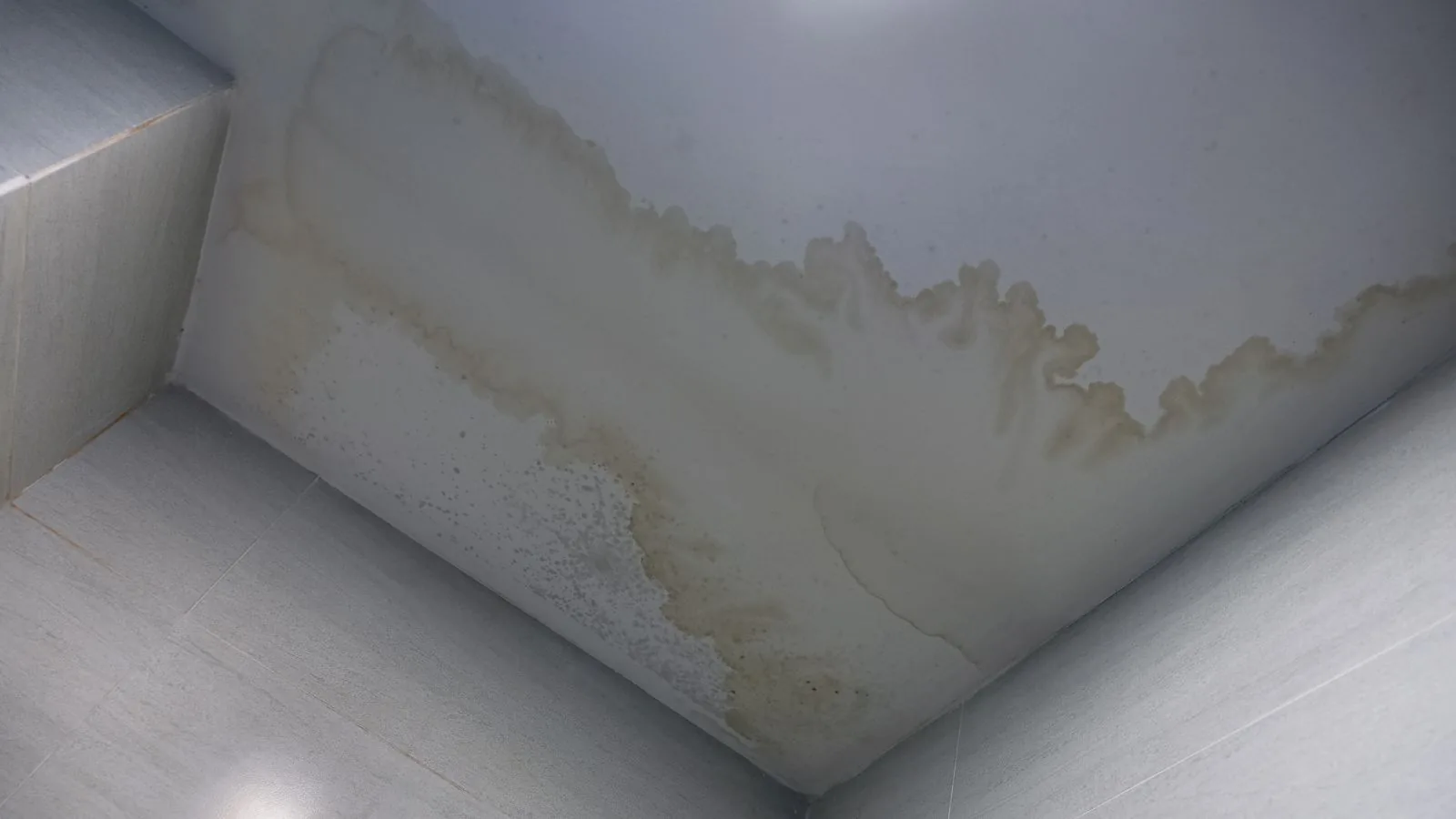
Emergency ceiling water damage repair in Attleboro, MA begins with the ceiling and works backward to the source above it. A tan ring, a bulge or a drip can come from a roof leak, an upstairs bathroom, a supply line or a condensate line in the attic, and the repair depends on which one it was.
The line is answered 24/7 because a bulging ceiling can release a load of water and plaster without warning. This page also owns roof leak water damage, since the ceiling is where a roof problem becomes damage inside the house.
What to do: if the ceiling is sagging
Move people and furniture out from under a bulging area. Puncture a single small hole only if a trained person tells you to, so trapped water drains into a bucket instead of falling as a sheet. Do not use a ceiling fan or fixture that is wet, and call the utility if water reaches wiring.
Photograph the stain from several angles before anything is moved. Stains grow, and the first photos show how far it had spread.
ANSI/IICRC S500 guides how wet ceiling materials are assessed and dried.
When a wet ceiling is an emergency
Drywall and plaster hold weight when dry and lose it when saturated. A ceiling with a pooled bulge is a falling hazard, and insulation above it holds water against framing long after the leak stops. Wet insulation also stops insulating, which turns a roof leak into a recurring cold spot.
A stain with no active drip can still be an emergency if it is spreading. Brown edges and rings that appear after the stain has dried usually mean water came through more than once.
Roof leak water damage
A roof leak reaches the ceiling by traveling along decking, rafters and the top of the insulation, so the stain is often several feet from the opening. Crews check the attic with a moisture meter and thermal camera, look at flashing around chimneys, vents and valleys, and find the wet insulation that is feeding the stain.
Restoration covers the water damage inside the house. Repairing the roof itself is a roofer's job, and a temporary tarp or sealing of the opening may be arranged so that drying can proceed without new water coming in.
Plumbing and attic sources
An upstairs bathroom, a leaking supply line or a failed shower pan sends water down through the floor system. An attic air handler with a clogged drain line drips onto the ceiling below, and the AC leak water damage page covers that source separately. A cracked line in a wall cavity belongs with burst pipe damage.
Water that dripped from a leak through a kitchen ceiling often wets the cabinets below, and the kitchen page covers that side.
Trace
Moisture mapping from ceiling to attic.
Relieve and remove
Bulged board and wet insulation come out.
Dry
Air movers and dehumidifiers on the cavity.
Repair
New board, texture and paint after readings are dry.
Stain getting bigger?
Call and describe what sits above the ceiling, an attic, a bathroom or a roof.
Ceiling calls come in from Attleboro, North Attleboro, Plainville, Norton and Seekonk, and from North Dighton too.
What affects the cost of a ceiling repair
| Factor | How it changes the job |
|---|---|
| Source of the water | A roof opening, a supply line and a drain line are fixed differently. |
| Ceiling material | Plaster, textured drywall and acoustic tile have different repair steps. |
| Insulation | Wet insulation is removed and replaced before the ceiling closes. |
| Area affected | Spreading stains mean more board, texture and paint. |
| Access above | Attic height and access decide how much time tracing takes. |
The scope and price are explained before work starts. Questions about a particular stain are welcome at (833) 521-1033.
Insurance and ceiling leaks
A sudden roof opening or pipe failure is often covered, while a leak that went on for months from worn flashing is often treated as maintenance. Insurers decide this by cause, so photograph the stain, document the moisture readings and read your policy before you speak with your insurer.
Ceilings in Attleboro houses
The Massachusetts Historical Commission survey notes triple-deckers and two-family houses east of the city center and Queen Anne houses at County Road and South Attleboro. In a three-story building, a stain on the top ceiling can start in a unit above or at the roof. Two-family houses add another question, which is whose pipe it is, so ask the property owner as well.
Ceiling leaks are a regular call from North Attleboro, Norton and Mansfield as well as Attleboro, and from North Dighton. Houses near the center are described on the City Center page.
Common questions
Do you handle ceiling water damage emergencies at night or on weekends in Attleboro?
Yes. The line is open 24/7, and a sagging ceiling after midnight gets the same attention as a stain found at lunchtime.
Can a stained ceiling be painted over?
Not safely until the source is found and the area is dry. Paint over a wet or contaminated ceiling hides the problem, and the stain returns when the moisture does.
Who repairs the roof?
A roofer does. Restoration crews handle the water damage inside and can coordinate temporary protection, but roof repair is a separate trade.
Does a ceiling leak always mean mold?
No. Mold needs moisture that lingers. Drying quickly and removing wet insulation lowers the chance, and no company can promise it will never appear.