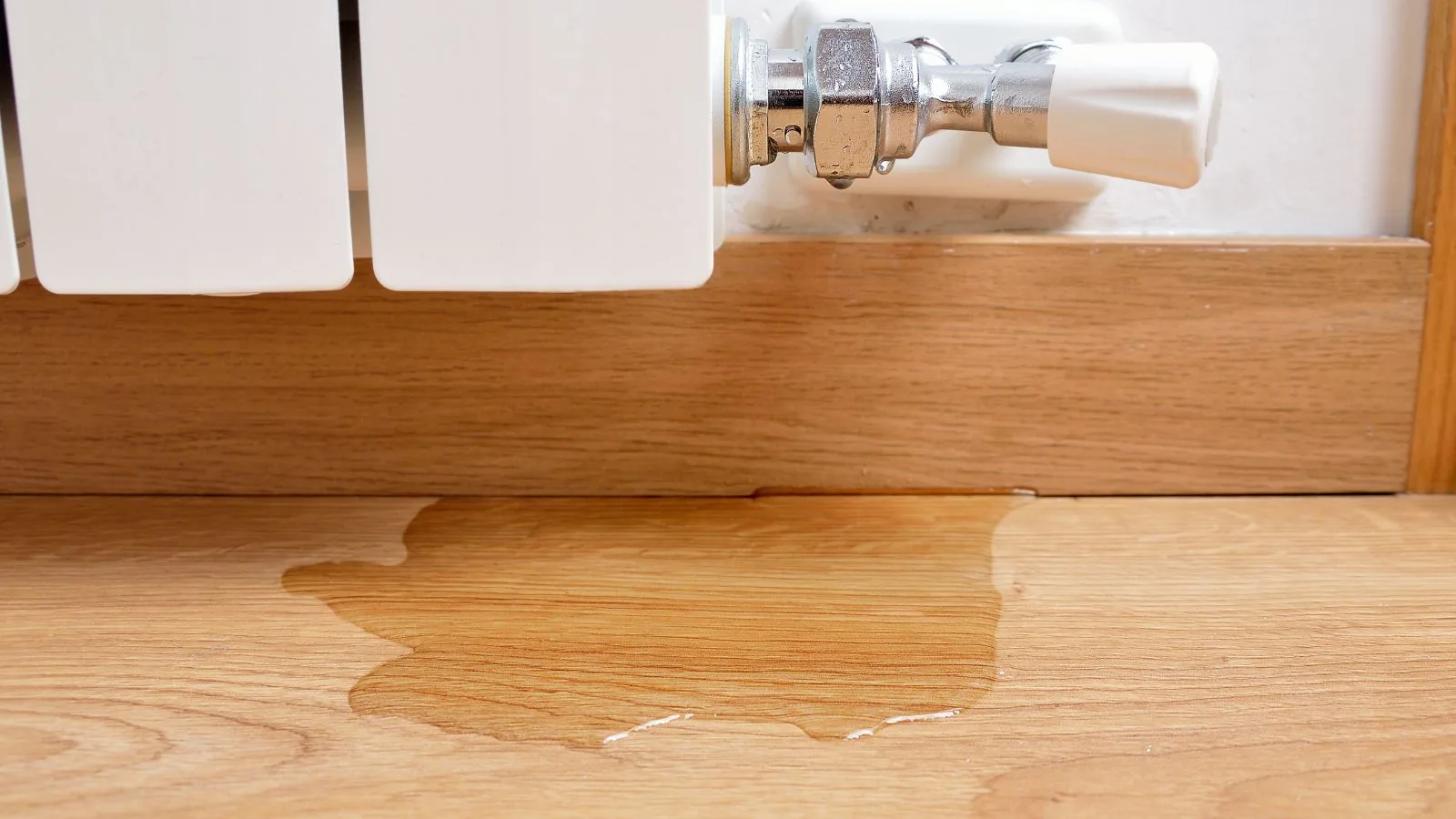
Hardwood floor water damage repair in Attleboro, MA begins with a plain fact. Wood takes up water, swells and changes shape, and it gives that water back slowly. A floor that is cupped a week after a leak is not necessarily ruined, and a floor that looks fine can hold water in the subfloor under it.
The aim is to dry the wood at a controlled pace and then decide, by measurement, whether it can be sanded and refinished or has to be replaced in part.
What cupping, crowning and buckling mean
| Condition | What you see | What it usually means |
|---|---|---|
| Cupping | Board edges higher than the center | Moisture came from below or from the side and the underside is wetter |
| Crowning | Board centers higher than the edges | Often seen after a cupped floor was sanded while still wet |
| Buckling | Boards lift off the subfloor | Heavy or prolonged wetting that broke the bond |
| Dark staining | Gray or black patches and boards | Long exposure to moisture and possible microbial growth |
These are visual clues. Meter readings decide the plan.
Why timing matters
The sooner the wetting stops and drying begins, the more likely the floor can be kept. Water that sits under a finished floor cannot evaporate except through the boards, so it either wicks upward or stays trapped in the subfloor.
The EPA recommends drying wet materials quickly to limit mold growth, and wood floors are slow to give up water. Open windows and household fans can pull moisture from the surface faster than the core and cause more cupping.
How a wood floor is dried
The crew takes moisture readings across the floor, records them and then sets up specialty drying. Mats and panels draw moisture out of the boards and subfloor, dehumidifiers control the air and the readings are logged at each visit.
Boards are checked against a dry reference for the species and the home. Sanding and refinishing wait until the floor has settled flat and the numbers confirm it. The method uses the same principles as the structural drying process, adapted to wood.
Floor cupping after a leak?
Call and describe the leak, the age of the floor and the finish.
What to do on a wet hardwood floor
Stop the source first, then blot standing water with towels. Do not use a heat gun or a hair dryer on the boards, and do not seal wet wood with any finish.
Lift rugs and furniture legs off the floor, note any cupping or lifted edges with photos, and call the line before sanding or pulling boards.
ANSI/IICRC S500 is the reference for drying wood flooring and deciding what can be saved.
How long a wood floor needs to settle
Wood floors can take weeks to settle after a wetting. Readings are taken until the boards reach equilibrium with the home's normal humidity. Rushing the sanding step is how flat floors turn into crowned ones, so the crew waits for the numbers before any finish work.
Seasonal humidity swings in New England also move wood. A floor that was dried well can still gap in a dry winter, which is normal and not a sign that drying failed.
Repair or replace
- A mildly cupped floor that dries evenly can often be sanded and refinished.
- Boards that stay buckled, split or stained deeply are replaced in sections.
- Engineered floors with thin wear layers tolerate less moisture than solid planks.
- Replacement boards are matched to species and finish where possible.
What affects the scope
| Factor | How it changes the job |
|---|---|
| Floor type | Solid, engineered and parquet floors respond differently. |
| Area affected | A room edge is a small job, a whole level is a large one. |
| Subfloor | Plywood, boards over joists and slabs need different drying. |
| Duration of wetting | Longer exposure raises the chance of replacement. |
| Finish | Refinishing needs time after drying is verified. |
The scope and price are explained before work, and (833) 521-1033 is the number to ask.
Insurance and wood floors
Coverage depends on the source of the water. Photograph the floor and take readings records if the crew provides them, and ask your insurer whether refinishing and board replacement are covered under your policy.
Wood floors in Attleboro houses
Many houses in the city, including bungalows and older two-families described in the Massachusetts Historical Commission survey, have original wood floors under newer coverings, and a leak may reach flooring that was not visible. Those floors are often thicker solid wood that can be refinished more than once.
Floor drying questions come up equally in Seekonk, Norton and Mansfield and in North Dighton. If the water came from a basement or slab, read the slab leak page or the basement page.
Common questions
Can a cupped hardwood floor be saved?
Often yes if drying starts promptly and is controlled. Readings over several days show whether it settles flat enough to refinish.
Should I sand the floor right away?
No. Sanding a floor that is still wet can lead to crowning and more damage. Wait for verified dry readings.
Are engineered floors different?
Yes. Thin top layers over plywood tolerate less water and are more likely to need replacement.
Why does the floor still look wet after the water is gone?
Moisture may remain in the boards or subfloor. A meter shows what the eye cannot.