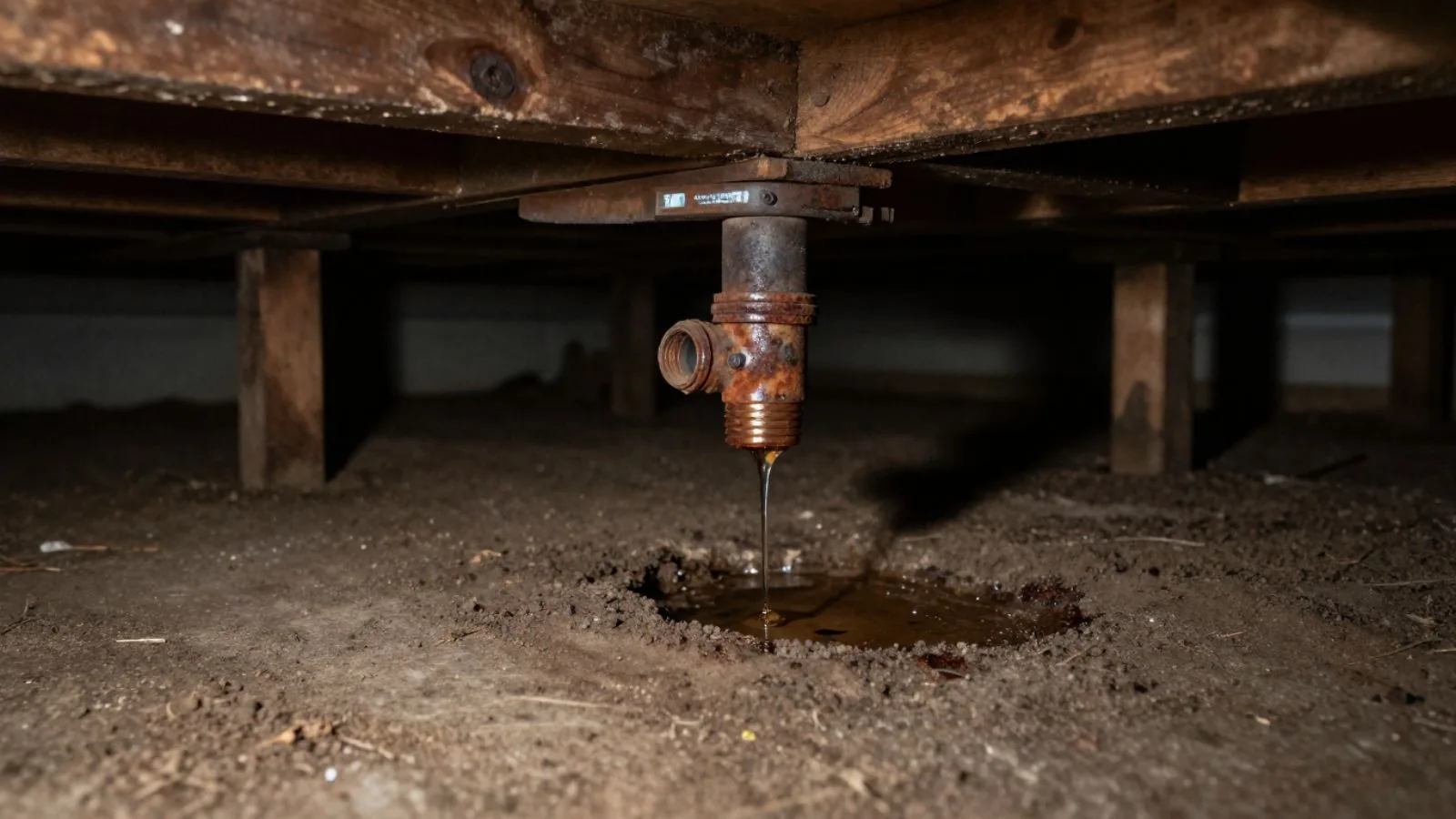
Crawl space water damage cleanup in Attleboro, MA covers the low, enclosed void under a floor. Water enters from groundwater, a plumbing leak, a failed sump pump or a drainage problem on the lot, and it stays because the space is dark, cool and poorly ventilated.
The damage is mostly structural and hidden. Joists, the underside of the subfloor, insulation, ductwork and a dirt floor all take on moisture, and the effect shows up above as cupped floors, a musty smell or a spongy spot underfoot.
Standing water versus damp air
Two different problems live under this title. Standing water is a flood: it is pumped out, and the space is checked for contamination. Chronic dampness is a humidity problem: no puddle, but wet insulation, condensation on ducts and a musty smell that gets into the house.
The cleanup differs. Standing water needs pumps and sometimes removal of soaked insulation, while dampness needs moisture readings, dehumidification and a look at what is feeding the moisture. Both are restoration questions, and neither is the same as waterproofing the space, which is a construction job.
What a crew checks
- Depth of standing water, access size and whether the space is contaminated by a drain or a sewer line.
- Insulation between joists, which sags when wet and should be removed if saturated.
- Moisture content of joists and subfloor, measured with a pin meter.
- Vapor barriers or ground covering, where present.
- Ductwork and pipes that may have started the leak or that are collecting condensation.
Crawl spaces are confined spaces, so crews wear protective gear and watch for electrical hazards, pests and structural concerns before entering.
Not sure what is under there?
Call and describe the access door, the depth you can see and any smell.
Before you go under the house
Do not enter a crawl space that holds standing water, has exposed wiring, or smells strongly of sewage or fuel. The space is tight, and a fall or a live cord is hard to escape.
Shut off the water main if a pipe is leaking and keep the access door closed to protect the rooms above. Note where water entered and call the line.
ANSI/IICRC S500 covers how wet crawl space materials are assessed and dried.
Looking at the crawl space safely
Use a flashlight from the access door before you go in. Look for standing water, sagging insulation, wet soil, mold-like staining on joists and gaps around pipes. Do not enter if there is water near wiring, a strong odor or limited headroom, and never go in alone.
Photograph what you see from the doorway. Those photos help the crew plan equipment and give your insurer a starting record.
How cleanup and drying work
Pumping starts with a small submersible pump through the access opening. Wet insulation is pulled out and bagged, since it holds water against the floor system, and the space is cleaned and treated before drying equipment goes in.
Air movers and a dehumidifier are set up to work in a tight space, with hoses vented out of the crawl space instead of back into it. Readings from joists and subfloor are logged until they match a dry reference. The method matches the structural drying approach.
Related water problems
If the water came from a plumbing line, see the burst pipe page. If it came from a house drain, the contamination rules on the sewage backup page apply. If the floor above has cupped, the hardwood floor page covers the finish side of the same loss.
What affects the cost
| Factor | How it changes the job |
|---|---|
| Access | A small hatch and a low clearance slow every step. |
| Depth and source | Groundwater, plumbing and drain water lead to different plans. |
| Insulation | Removal and replacement of saturated insulation is added to the scope. |
| Floor condition above | Cupped or soft floors may need separate attention. |
| Moisture control | Dehumidification time depends on how damp the space is. |
A written scope with the price is explained before any work, and (833) 521-1033 is the number for questions.
Insurance and crawl spaces
Coverage depends on the cause. A sudden plumbing discharge is treated differently from groundwater, and flood and seepage are commonly excluded from standard homeowners policies. Photograph what you see and ask your insurer before work begins.
Houses with crawl spaces around Attleboro
The Massachusetts Historical Commission survey describes the mix of mill cottages, double-deckers and bungalows in Attleboro, and some older houses and additions have a crawl space instead of a full basement. The survey does not say how common crawl spaces are, and no local figure is claimed here.
Crawl space and under-floor water calls are handled the same way in Norton, Mansfield, Seekonk and Rehoboth. North Dighton, a mill village on the Three Mile River, is also included.
Common questions
Is crawl space water an emergency?
Standing water or a running leak is urgent because the joists and insulation are already wet. Chronic dampness is less urgent but should still be assessed.
Can you restore a crawl space or only dry it?
The crew pumps, removes wet insulation, cleans and dries. Waterproofing or grading changes are construction projects handled separately.
Why does my house smell musty if the crawl space looks fine?
Air moves from under the floor into the living space. Moisture readings and a look at insulation and ducts show whether the space is the source.
Does a wet crawl space damage the floors above?
It can. Moisture moves up into subfloors and finished floors, and wood floors may cup if the crawl space stays damp.
Can an irrigation or sprinkler problem flood a crawl space?
Yes. A broken line, a backflow or a neighbor's runoff can send water toward a foundation vent or into the crawl space. Fix the source, then dry the space so the framing and insulation above it do not stay wet.