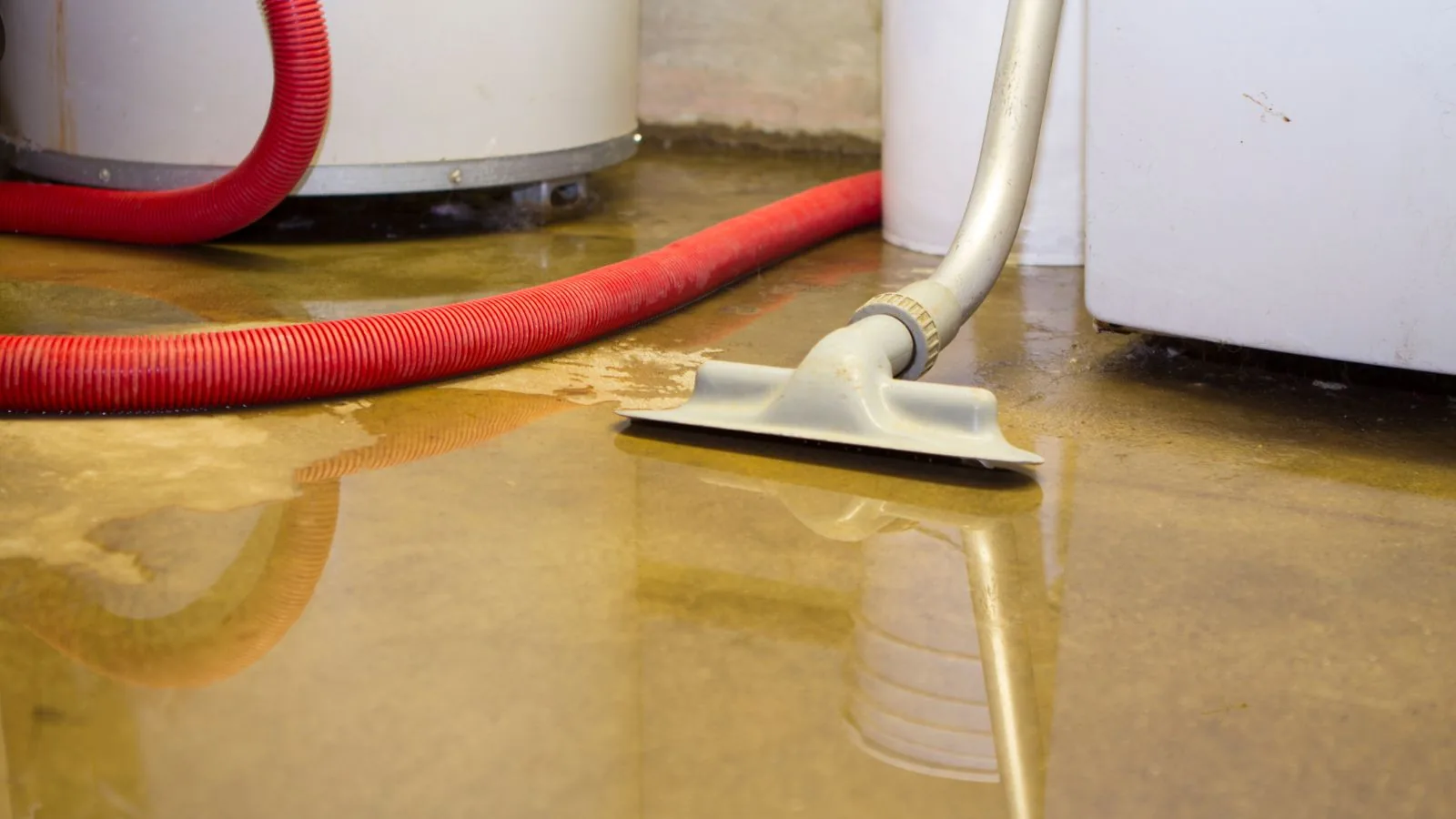
Emergency appliance leak water damage in Attleboro, MA usually begins with a rubber hose, a drain connection or a plastic fitting behind a washer, dishwasher or refrigerator. The line is open 24/7, and the first question is simple: can you reach the shutoff valve behind the unit?
Appliance water is often Category 2, which means it carries detergent and soil, and it tends to move under cabinets and along baseboards before anyone notices. That is the main reason these losses cost more than the hose that caused them.
What to do: first steps
Shut off the supply valve behind the appliance. If the outlet is dry, unplug the unit, and if the cord is in water, switch off the breaker from a dry spot or call the utility.
Do not pull the appliance out across a wet floor, since the hose connections are still pressurized and water behind it is often deeper than it looks.
ANSI/IICRC S500 is the reference standard for classing and drying appliance leak water.
When an appliance leak is an emergency
A washing machine supply hose can fail under full line pressure and release water continuously until the valve is closed. A dishwasher drain or supply line may leak only during cycles, so the damage builds in short bursts. A refrigerator ice maker line leaks from a small fitting, often behind the unit where it cannot be seen, and can run for weeks.
The longer an appliance leak runs, the more it reaches subfloors, the underside of kitchen cabinets and the ceiling below a second-floor laundry.
Which appliance, which damage
| Appliance | Common failure | What gets wet |
|---|---|---|
| Washing machine | Supply hose burst or drain hose pulled out | Laundry floor, wall base, ceiling or room below |
| Dishwasher | Door gasket, drain hose or supply fitting | Cabinet base, kitchen floor, sometimes the basement below |
| Refrigerator | Ice maker or water filter line | Floor under and behind the unit, adjoining wall |
| Dehumidifier or humidifier | Overflow or full tank | Floor around the unit, nearby carpet |
A slow leak under an appliance can be hidden by vinyl or tile while the subfloor beneath stays wet.
How cleanup works
The crew traces the water with moisture meters, extracts what is standing and removes damaged flooring layers that trap moisture, such as cushioned vinyl over plywood. Wall bases are checked behind baseboards, and cabinets are probed at the kick and the bottom shelf.
Drying equipment is set for the specific floor system. Cabinet toe-kicks are often removed so air can reach the space underneath, a step also covered on the kitchen water damage page. Hardwood floors and carpet near the appliance get their own assessments.
Not sure how far the water went?
Call and describe where the appliance sits and what is beneath it.
What shapes the scope
| Factor | How it changes the job |
|---|---|
| How long it leaked | One cycle is localized, weeks of seepage reach framing. |
| Flooring layers | Tile, vinyl, laminate and subfloor each need a plan. |
| Cabinet and wall exposure | Bases and toe-kicks may be removed to dry. |
| Rooms below | A second-floor laundry leak can stain the ceiling underneath. |
| Appliance replacement | Repair or replacement happens separately from drying. |
Scope and price are explained before work begins. A call to (833) 521-1033 is welcome if you are not sure where to start.
Insurance and appliances
A sudden hose failure is generally an accidental discharge that many policies address, while a leak that went on for weeks may be excluded as continuous seepage. Keep the failed hose, photograph the floor and the unit, and ask your insurer how your policy treats appliance discharge.
Laundry rooms and kitchens around Attleboro
The Massachusetts Historical Commission survey describes triple-deckers and two-family houses, and in those buildings the laundry and kitchen are often over a neighbor's ceiling or a shared basement. A hose failure upstairs becomes a ceiling and wall problem downstairs, and the ceiling page explains what that looks like.
Appliance hose failures bring calls from Plainville, Norton and Mansfield, and from North Dighton, Seekonk and Rehoboth.
Common questions
Do you handle appliance leak emergencies at night or on weekends in Attleboro?
Yes. The line is staffed 24/7, and appliance hoses often fail overnight or while a household is away.
How can I tell if a dishwasher or washer is leaking inside the wall?
Look for a musty smell, soft flooring near the unit, a stain on the ceiling below, or a rise in the water bill. A moisture meter confirms what the eye cannot.
Do I need to replace my kitchen floor?
Not always. A thin leak on tile over a dry subfloor may only need drying, while cushioned vinyl over plywood often has to be lifted because the layers hold water.
Who pays for appliance leak damage in a rental?
It depends on the lease and the cause, so tell the landlord quickly and keep photos. Landlord and tenant insurance usually cover different things, so report the loss to both.