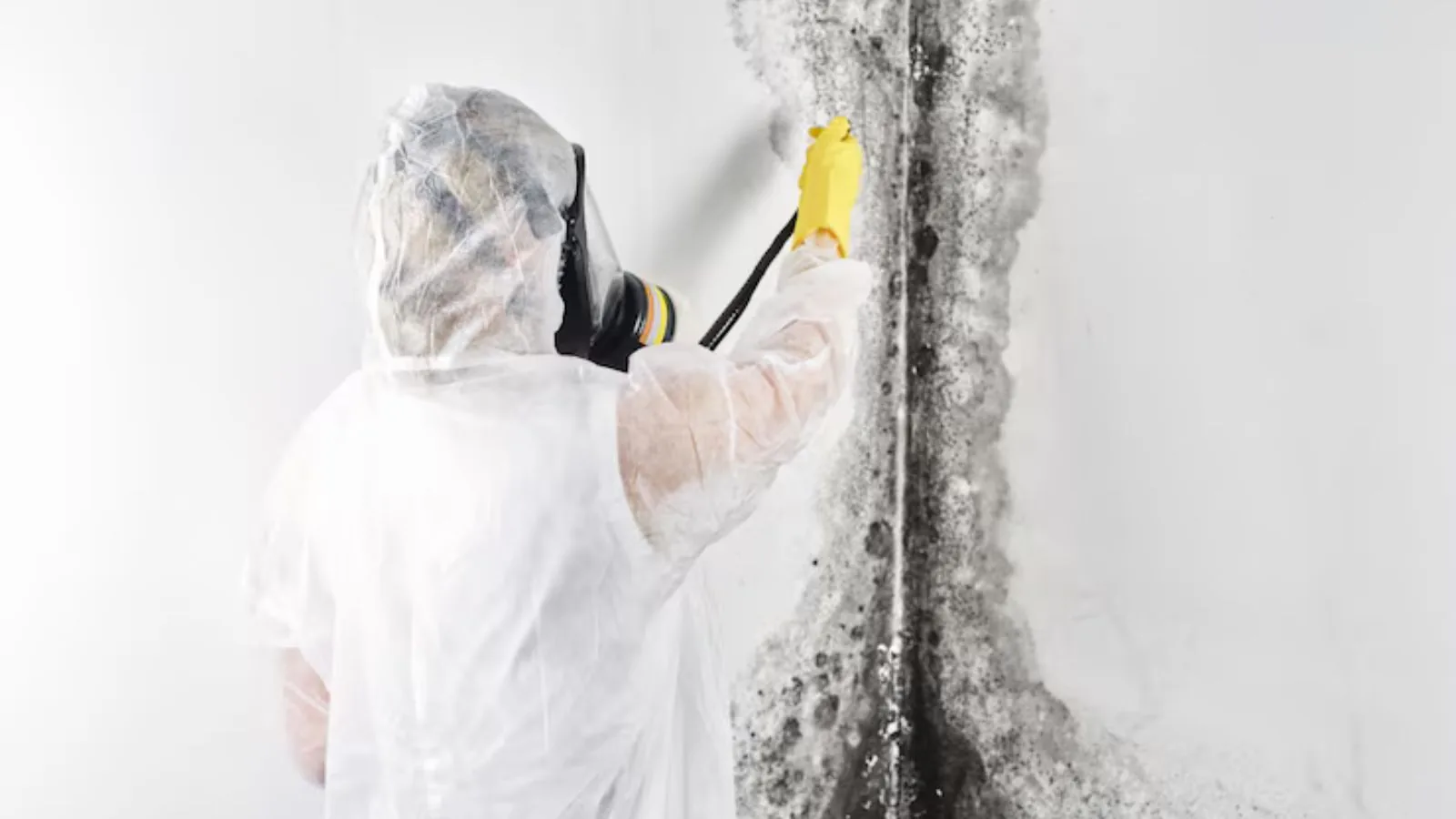
Mold remediation after water damage in Attleboro, MA is the work of removing mold growth from building materials and correcting the moisture that allowed it. The industry reference is ANSI/IICRC S520, the standard for professional mold remediation, and the process is built around containing the area, removing affected material and drying what remains.
This page is about mold that follows water. It is not a general mold testing service and makes no health claims. For questions about symptoms, speak with a doctor.
Musty smell, dark spots, or damp walls: what it can mean
Most people reach this page by symptom. A musty smell in a room that had a leak, dark spots on a wall or ceiling, a stain that returned after painting, or flooring that never quite dried are all common reasons.
These signs mean moisture is present and growth is possible. They do not by themselves show what kind of growth or how much. A person trained to assess the area can confirm what is there and how far it extends.
Why mold follows water damage
The EPA states that mold needs moisture to grow and that the way to control it is to control moisture. Materials that stay wet for a day or two, such as drywall paper, carpet pad, ceiling tile and wood, can start to grow mold.
Controlling moisture quickly is why drying is so central to water damage work. Remediation is what happens when drying was delayed or missed, and the structural drying page explains the prevention side.
How remediation works
Assess
Find the extent of growth and the moisture source.
Contain
Isolate the area and filter the air during work.
Remove
Remove affected porous material and clean hard surfaces.
Dry and verify
Dry the structure and confirm readings before repair.
Containment is the difference between remediation and wiping. Plastic barriers and negative air keep spores from moving to clean rooms while the crew works, and HEPA filtration cleans the air that leaves the work area.
Growth showing after a leak?
Call and describe where it is, how large it looks and when the leak happened.
What to do and what not to do
Do not disturb a suspect area by scrubbing it, sanding it, or spraying it with a household product. Disturbing it can spread material to other rooms.
Stop the moisture source, run a dehumidifier if the area is dry and the unit is safe to plug in, and photograph the spot. Questions about health belong with a doctor, and the crew will explain the containment plan.
Mold remediation practice follows ANSI/IICRC S520.
How remediation is verified
The goal is a dry structure with no remaining growth on the surfaces that were treated. The crew checks moisture readings, looks at cleaned surfaces and, if the plan calls for it, an independent party can test after the work. Remediation and testing are separate services, and some owners prefer them to be separate companies.
Ask for a written summary at the end of the job that lists what was removed, what was cleaned, the final readings and the date the area was released for rebuilding.
What can be cleaned and what is removed
| Material | Usual approach |
|---|---|
| Drywall and ceiling tile | Removed if growth is present, since the paper holds it |
| Carpet and pad | Removed and discarded |
| Wood framing | Cleaned and dried, sanded where appropriate |
| Concrete and masonry | Cleaned and dried |
| Insulation | Removed if wet or affected |
A scope lists what is removed and what is cleaned before work begins.
What affects the scope
| Factor | How it changes the job |
|---|---|
| Area affected | Small patches and whole rooms are very different jobs. |
| Materials | Porous materials are removed, hard materials cleaned. |
| Moisture source | The leak must be fixed or the growth returns. |
| Containment | Larger areas need more barriers and filtration. |
| Rebuild | Drywall, paint and flooring replacement are separate steps. |
A written scope with the price is explained first. For questions, call (833) 521-1033.
Insurance and mold
Mold coverage varies widely and some policies limit or exclude it unless it follows a covered water loss. Ask your insurer before work starts, and keep photos, reports and receipts.
Mold risk in New England houses
Humid summers and cold winters create both condensation and leak conditions in older houses. Basements, bathrooms and attics are common places for growth to start, and the Massachusetts Historical Commission survey describes a large older housing stock across the city.
Mold concerns after a leak get the same assessment in Seekonk, Norton and Plainville and in North Dighton. Wet carpet that may be involved is covered on the carpet page, and wet walls on the wall page.
Common questions
I smell mold but cannot see it. What should I do?
Moisture may be inside a wall or under flooring. A moisture meter and an inspection can find where it is.
Can I clean mold myself with bleach?
On small hard surfaces it may be possible, but porous materials hold growth and bleach does not fix the moisture. Larger areas should be assessed.
Does mold remediation include testing?
Remediation focuses on removing growth and controlling moisture. Independent testing is a separate service some people choose.
Will mold come back?
It can if moisture returns. Fixing the source and drying the structure are what lower the chance.
Can a buyer or lender require mold work before a sale closes?
It happens. A lender or buyer may ask for the mold to be removed and for independent clearance testing before closing. Whether a lender accepts a given report is its own decision, so ask the lender what it requires and keep the written reports.