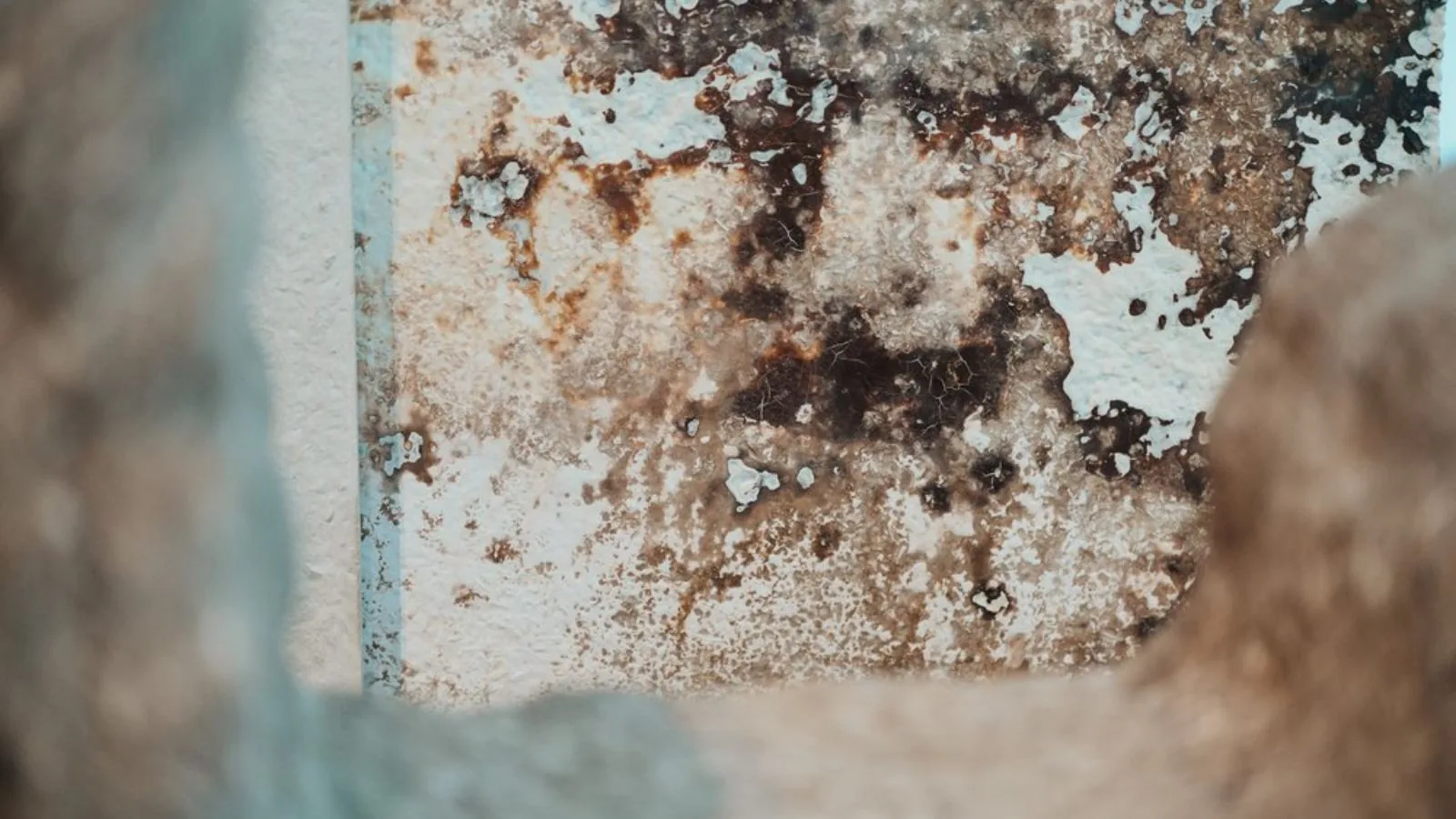
Dark spots on a wall can be mold, soot, dirt, mildew, water staining or paint trouble. A photo of a spot rarely settles it. What a person can do is learn the common looks and the situations where mold is most likely, then act on the moisture and not on the guess.
This guide describes appearance in general terms. It does not identify any organism and makes no health claims.
Common looks
| Appearance | Often found on | Notes |
|---|---|---|
| Black or dark green speckles | Drywall, ceiling tile, wood | Often in clusters that grow outward over time |
| Fuzzy or velvety texture | Wall surfaces, basement items | Texture can change as it dries |
| Slimy or wet look | Surfaces that are still damp | Points to active moisture |
| White or gray fuzz | Wood, stored cardboard, basements | Can be other mold types or mineral deposits |
| Orange or pink film | Showers, sinks, drains | Often bacteria, not mold |
Color varies with species and material, so it cannot be used to name what you are looking at.
Where it tends to show up
- The underside of a bathroom ceiling, around the fan and above the shower.
- Basement walls, especially the lower strip and corners.
- Window sills and frames where condensation collects.
- The back of drywall behind a leaking pipe, which you will see only when it is opened.
- Carpet backing and pad after a wet spell.
- Attic sheathing near a roof leak or a poorly vented bath fan.
Look-alikes that are not mold
Soot streaks from candles and heaters, dust on cold wall corners, dirt trapped behind a radiator, rust-colored water stains and efflorescence on masonry can all look like mold from a distance.
A simple test is to touch it with a damp cotton swab. Dirt and soot smear, and growth often leaves a different residue. Because the test is not conclusive, treat a persistent dark patch in a damp area as a moisture clue.
Cannot tell what it is?
Call and describe where it is, how large it is and whether the area got wet.
How growth changes over time
Early growth often looks like small, scattered specks. As it spreads, specks merge into patches with soft edges, and on wet drywall the paper face may discolor in rings that follow the path of the water. Older, dry growth can look powdery or flat, while active growth on a damp surface may look glossy or slimy.
Because appearance changes with moisture, a photo taken today may look different next week. That is one reason to photograph an area with a ruler or a coin for scale and note the date.
What a professional looks for beyond the surface
A trained assessor uses a moisture meter and thermal camera to find the wet material behind the stain, checks the likely water source and looks at nearby spaces such as closets and the other side of the wall. The visible patch is often the smallest part of the problem, which is why guessing from appearance alone can mislead.
Photographing it for a record
Take a wide shot that shows where the growth is in the room, then a close shot with a coin or ruler for scale. Take one more from a different angle in natural light. Date each photo and note whether the area was recently wet. These photos help a professional plan the visit and help an insurer see what the area looked like before cleanup.
Smell and other clues
A musty smell is a clue that something is wet, even when nothing is visible. Peeling paint, bubbling plaster, warped baseboards and a stain that grows after rain or after showers are other signs of moisture behind the surface.
The cause matters more than the color. A leak, a roof opening or a failed seal explains why growth started, and the wall and drywall page describes what happens inside a wet wall.
What to do after you find it
- Do not disturb it by sanding or brushing.
- Find the moisture source and stop it if you can.
- Photograph it and note where and when you saw it.
- Decide whether it is a small hard-surface patch or something larger.
- Call a professional for large areas, drywall, carpet or anything after sewage or flood water.
Where this fits in a water damage story
Dark growth usually appears after a water event that was not dried in time. The structural drying page describes how drying works, and the mold remediation page explains how growth is removed.
The line takes calls from Dodgeville, North Dighton and across Attleboro.
What to do if you see a dark patch
Leave the patch alone, fix or report the water source and photograph it with a coin or ruler for scale. Color alone does not identify a material, so a professional assessment under ANSI/IICRC S520 is the reliable way to learn what it is.
Attleboro: older housing and where moisture hides
The Massachusetts Historical Commission survey of Attleboro describes the development of mill villages and neighborhoods from the early industrial period onward. Older houses often have plaster walls, stone or brick foundations and basements, which can stay damp when water is not controlled.
The City of Attleboro Water Department points out that an unexplained increase in your water bill likely indicates a leak at the property. A hidden leak is one way a wall or ceiling stays damp enough for growth, so a rising bill together with a dark patch deserves a closer look.
Common questions
Is all black mold dangerous?
Color cannot tell you. This site makes no health claims, so ask a doctor about symptoms and a trained assessor about the growth.
How can I tell mold from dirt?
Dirt and soot often smear. A persistent dark patch in a damp area is better treated as a moisture clue and assessed.
Can mold grow behind wallpaper or paint?
Yes. Moisture behind a surface can feed growth that you only see when it is opened or when paint bubbles.
What does a rising Attleboro water bill have to do with it?
The city says an unexplained increase likely indicates a leak. A leak inside a wall can keep it wet enough to grow mold.