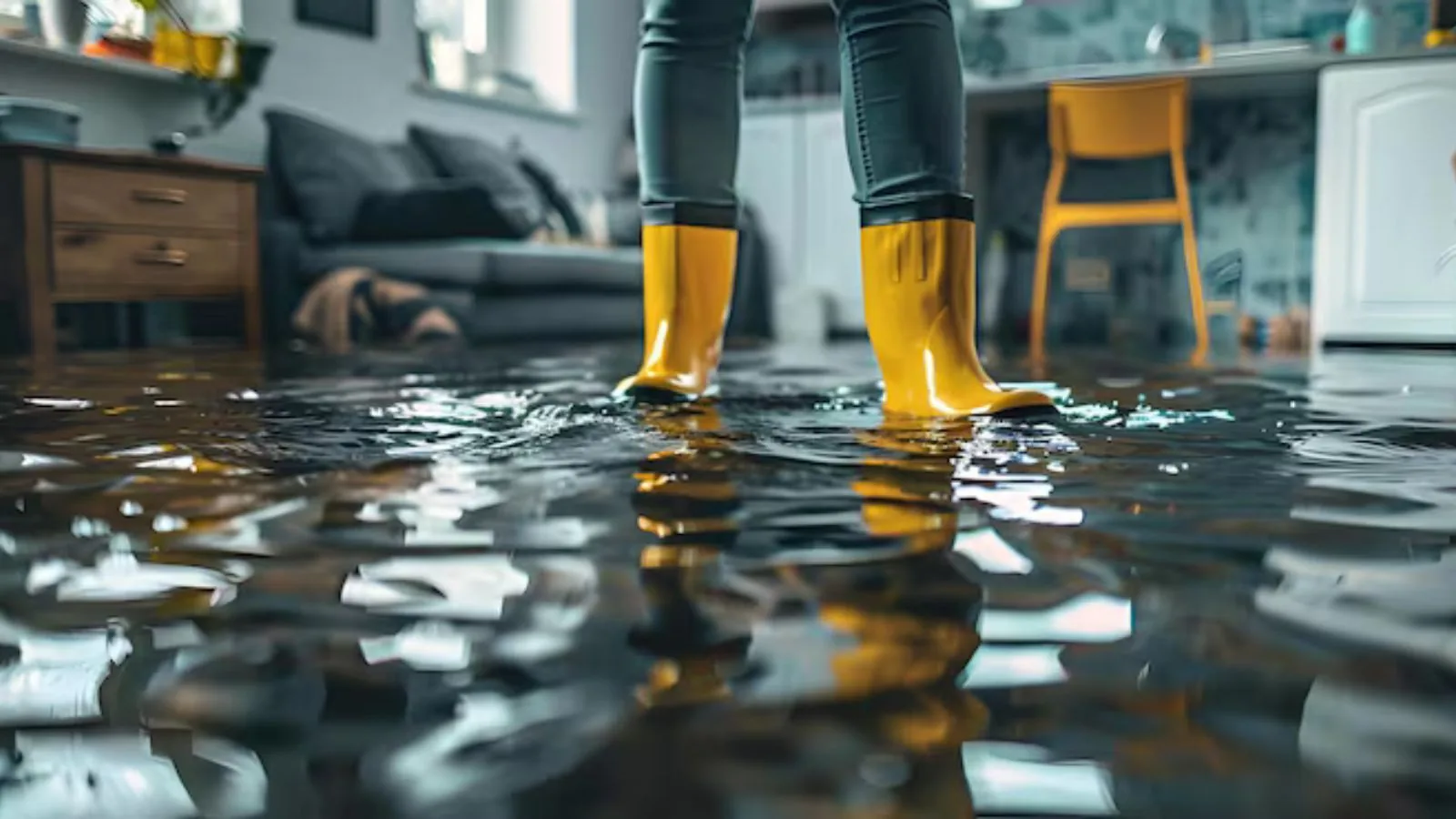
After a leak or flood, the question is usually whether the TV, the computer or the router can be saved. The more urgent question comes first, which is whether it is safe to touch anything. Water that reaches outlets, power strips or a breaker panel is a shock hazard, and the safe step is to cut power at the source before reaching for anything.
This page is general safety information, not a repair guide. When wiring or the panel is wet, an electrician decides what is safe.
First: make the space safe
Before you touch anything electrical
Do not stand in water to reach a switch, a cord or a panel. If water is on the floor near outlets or the panel, stay out and call the utility or 911, then call an electrician.
If you can reach the breaker panel while standing on dry ground, turn off the breakers that feed wet rooms. If you cannot reach it safely, leave it alone.
When to unplug a device
| Situation | What to do |
|---|---|
| Device is dry, nearby floor is wet | Unplug only if the cord and the outlet are dry and you are not in water |
| Device got splashed or dripped on | Cut power at the wall, unplug, leave it off and let it dry |
| Device sat in standing water | Do not turn it on. Get it checked by a technician |
| Power strip or extension cord is wet | Do not use it. Replace it |
| Large appliance near water | Turn off its breaker, not the appliance, if the panel is safe |
If in doubt, treat it as unsafe and call a licensed electrician.
What not to do
- Do not press the power button to see if it still works.
- Do not use a hair dryer or an oven to dry electronics, since heat can damage components.
- Do not charge a wet phone or tablet.
- Do not use a regular vacuum on wet electronics.
- Do not reuse a wet power strip, surge protector or extension cord.
How electronics are dried
Once power is off, remove batteries and cables, open compartments, and let the device air dry in a dry, ventilated room. Silica gel packs help absorb moisture in small items. Rice is a common suggestion, but it is not shown to be better than open air and can leave dust in ports.
Salt water, sewage and dirty flood water are different. They leave residues that corrode circuits, and a technician may be able to clean boards. Insurance for electronics depends on the cause of the water and your policy.
Water near the electronics?
Call and say which rooms are wet and whether the power is on.
Backing up data before it is too late
If a computer, phone or external drive got wet but you have not powered it, the data may still be intact. Powering a wet device can short the board and lose data that was recoverable. Leave it off and take it to a data recovery or repair shop, and tell them exactly what the device was exposed to.
For the future, keep important files in a second place such as a cloud account or a drive stored on an upper floor. Basements flood far more often than bedrooms.
Documenting electronics for a claim
Photograph each damaged device, including the model and serial number. Keep the receipt or a screenshot of the order if you have one. Many insurers want a list with approximate age and replacement value, and some depreciate electronics quickly, so accurate ages help.
Appliances and wiring
Refrigerators, washers, furnaces and water heaters contain controls and motors that suffer when wet. If any of these sat in water, do not run them until they have been checked. A wet furnace or water heater is both an electrical and a gas safety question, so call the utility if you smell gas.
The appliance leak page and the water heater page describe what happens when the appliance is the source of the water.
Drying the space is part of protecting the wiring
Wet wall cavities can hold water around cables and boxes. Drying with air movers and dehumidifiers, guided by readings, is how that moisture is removed. The structural drying page describes the method.
Basements are where stored electronics and panels meet water most often, and the basement page explains the first steps.
Nearby villages and what they share
Older homes in Hebronville and North Dighton often have mixed wiring from different decades, so an electrician's check after any water event is a sensible step.
Attleboro: who to call and which permits apply
The City of Attleboro Water Department lists a 24/7 emergency line at 774-203-1854 for water service problems, and it says the police emergency line, 508-223-2950, handles after-hours non-water emergencies. Water in a basement near a panel is a reason to call the utility or 911, depending on the hazard.
For repairs, the City of Attleboro Building Department says electrical permits are issued only to Massachusetts licensed electricians as of March 1, 2022. Homeowners cannot pull them, so electrical repair after a flood needs a licensed professional and a permit.
Common questions
Should I unplug a TV that got wet?
Only if you can do so safely with dry hands and without standing in water. If water is near the outlet, cut power at the panel or leave it and call.
Can a wet laptop be saved?
Sometimes, if clean water was involved and power stayed off. A technician can check it. Do not turn it on to test it.
Is rice a good way to dry electronics?
It is a popular tip, but open air and silica gel are at least as good. The key is leaving the device off.
Who can do electrical repairs after a flood in Attleboro?
Only a Massachusetts licensed electrician can pull the permit, according to the Building Department.