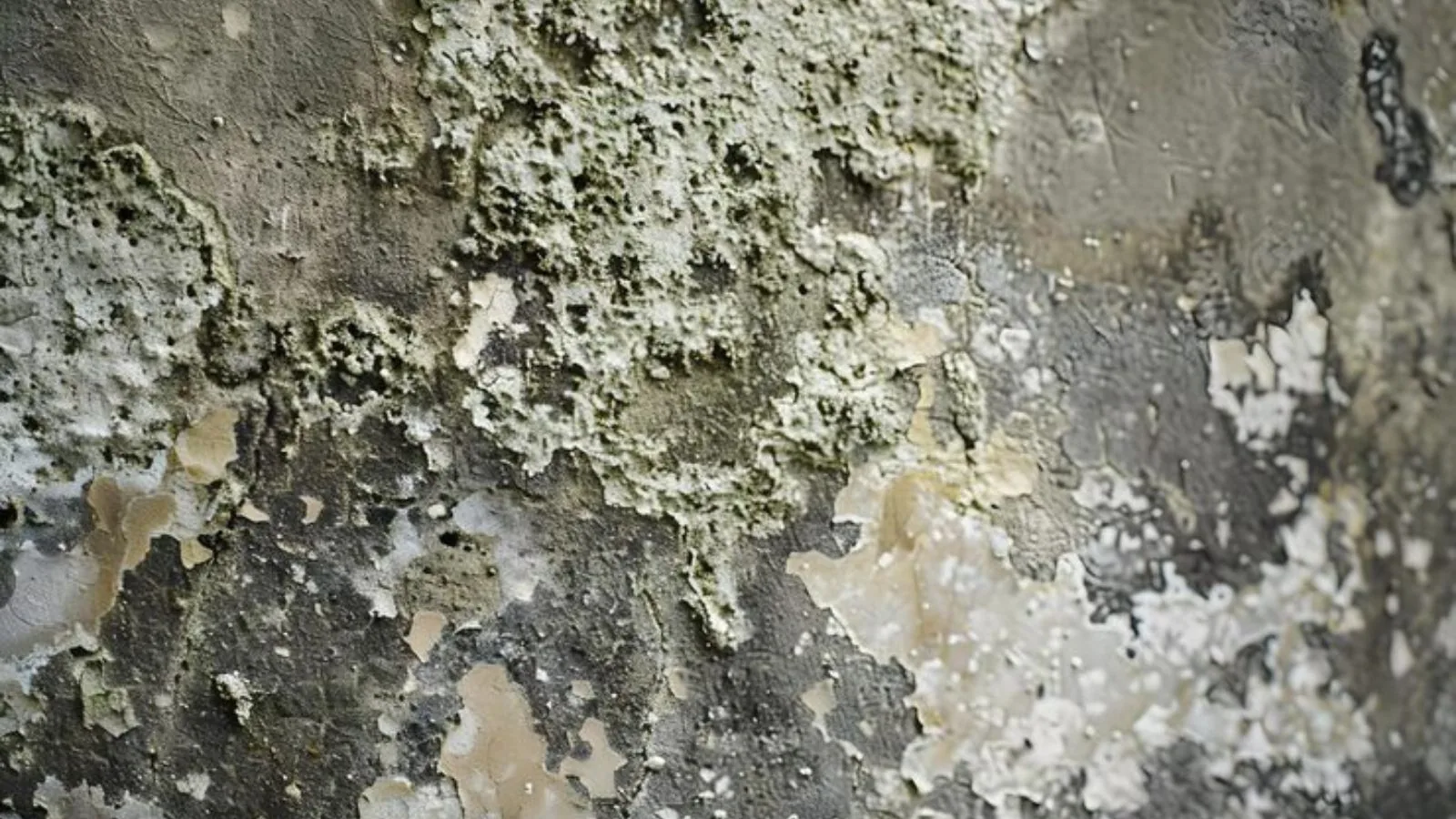
The smell after a leak often lingers for weeks. People try candles, sprays and ozone machines, and the odor comes back on the next humid day. That happens because the cause is a material that is still damp, not the air.
This page is general information. If you have health concerns about air in your home, ask a doctor.
Why water damage smells
Wet materials that stay damp can support microbial growth, and the compounds those organisms give off are what you smell. Porous materials such as carpet pad, drywall paper, insulation and wood hold moisture and odor. Dust and dirt carried in by water add their own smell.
The smell often strongest near the source, but not always. Air moves through wall cavities, floors and ducts, and an odor in one room can start somewhere else.
Step 1: find what is still wet
- Check carpet edges, the underside of rugs and the base of walls.
- Open cabinet doors and look at the back and floor of the cabinet.
- Check ceilings, closets and the corners of basements.
- Use a moisture meter if you have one, or ask a professional to map it.
- Smell stored cardboard, paper and fabric, which absorb water and odor.
Step 2: dry it completely
Dry the structure with air movers and a dehumidifier, guided by readings. Open windows help only on dry days. A household dehumidifier can lower humidity, but wet material inside a wall needs more than that.
The structural drying page explains the process, and the carpet page covers the pad, which is often the culprit.
Step 3: remove what cannot be dried
| Material | Usual approach |
|---|---|
| Carpet pad | Replace |
| Wet insulation | Remove and replace |
| Swollen particleboard | Replace |
| Wet drywall | Cut out and replace when saturated |
| Stored cardboard and paper | Discard if wet |
| Hard surfaces and framing | Clean and dry |
Odor stays in porous materials, so removing them removes the smell.
Cannot find the source?
Call and describe where the smell is strongest and what got wet.
Humidity and the smell that returns
Even when a source is dry, high humidity can bring an odor back. Basements and closets can sit at a humidity level that wets materials every muggy week. A hygrometer, which costs little, shows the number, and the EPA suggests keeping indoor humidity roughly between 30 and 50 percent.
A dehumidifier sized for the space, drained to a sink or floor drain, is often the missing piece after a cleanup. Keep doors open between rooms so air moves, and keep stored items off the floor and away from exterior walls.
When the smell points to a bigger problem
A strong odor that is limited to one wall or one floor area, a stain that keeps returning, or a smell that appears with heating or cooling can mean moisture in a cavity or duct. A moisture map from a professional finds the source without tearing out a whole room.
Odor products and what they do
Sprays, candles and plug-ins add fragrance and do not remove moisture or the source of the smell. Activated charcoal and filtered air cleaners can reduce lingering odor in a space once the source is dry. Enzyme cleaners are used on organic soils such as pet accidents and sewage residue. None of these replaces drying, and none should be used to cover a smell you have not traced.
If you have asthma or sensitivities, ask a doctor how to protect yourself while the cleanup is under way.
Step 4: clean and ventilate
Once the source is gone, clean hard surfaces with detergent, wash fabrics and ventilate. Air purifiers with filters can help with lingering odor but do not replace drying. Skip scented products that cover the smell, since they hide the clue you are following.
If the smell returns on humid days, there may be moisture still in a wall or crawl space. The crawl space page and the basement page cover two common hiding places.
When it may be mold
If you find visible growth or the smell is strong in one area, the mold remediation page describes the professional process. Growth inside walls can be present with no visible sign.
A pro can map moisture, open a small section and check. That is faster than guessing.
Where this shows up around Attleboro
Basements, finished attics and closets on exterior walls are common starting points in older houses, such as those in Dodgeville and North Dighton. The common thread is moisture, not the neighborhood.
What to do while you find the source
Open nothing that is wet, keep fans from blowing across damp walls and note where the smell is strongest. If growth is found, remediation practice follows ANSI/IICRC S520, and drying practice after the leak follows ANSI/IICRC S500. Those two standards are the reference points a crew should be able to name.
Attleboro: two tests that find a hidden source
The City of Attleboro Water Department suggests two simple checks. For a toilet, put dye in the tank, do not flush, and see whether the color reaches the bowl, which shows water passing the flapper. For the whole house, compare two meter readings taken with every tap off.
Identical readings mean no leak is passing the meter. A moving dial means water is going somewhere, and closing the home's valve helps tell whether the leak is inside the house. A hidden leak is a common reason a smell returns after every cleanup.
Common questions
Why does the smell come back on humid days?
Because a material is still damp or humidity is high enough to rewet it. Dry the source and control humidity.
Do ozone machines fix the smell?
They do not dry anything, and they are not a substitute for finding and drying the source. Ask a professional before using one.
Is baking soda enough?
It can reduce a mild odor in a closed space but does not fix a damp pad or wall.
How do I check for a hidden leak in Attleboro?
Use the city's dye test for toilets and the meter test for the whole house. Moving readings point to a leak.