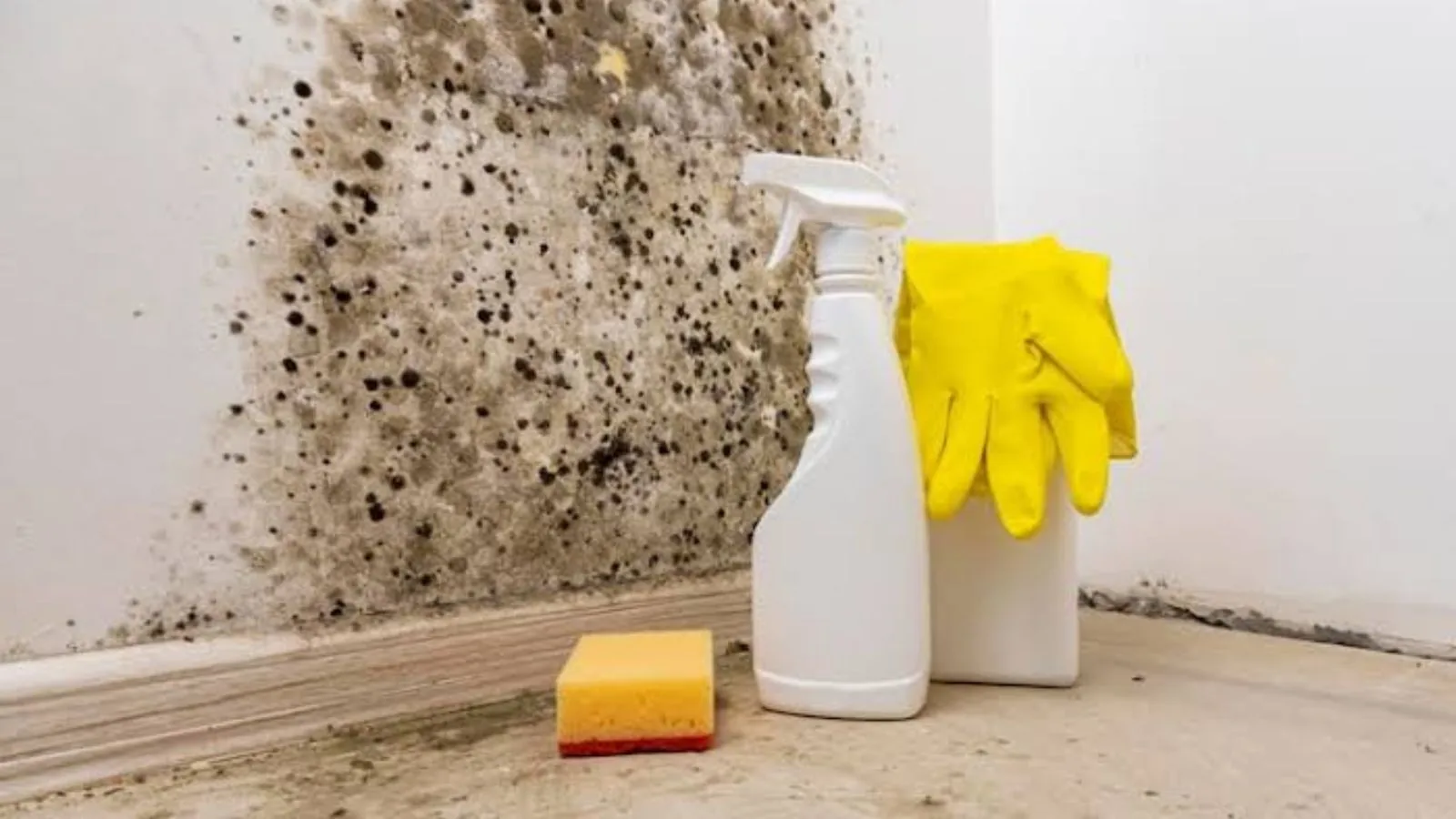
People call it black mold because of the color, and that nickname covers many different organisms. A dark patch on a bathroom ceiling and a dark stain on a basement wall can be different things, and the color alone does not tell you which. What they have in common is that they grew where moisture stayed.
This guide is general information about cleaning and control. If you have health concerns, talk to a doctor. This page makes no health claims.
Step 1: decide whether it is a small job
A small, hard-surface patch, such as grout, a tile joint or a painted bathroom wall, can often be cleaned by an owner who protects themselves. Larger areas, growth inside walls, growth on drywall or carpet and growth after sewage or flood water are different and are assessed by a professional.
A common guideline from public health sources is that patches larger than about ten square feet call for professional help. Check the current guidance from your state or the EPA for the exact wording.
Step 2: protect yourself and the house
- Wear an N95 respirator, gloves and eye protection.
- Keep the work area closed off, and do not run a central fan that moves air through the house.
- Do not dry-brush or sand mold, which sends spores into the air.
- Open a window and run a fan that exhausts to the outside if you can.
- Bag removed material tightly before carrying it through the house.
Step 3: clean hard surfaces
A common recommendation is detergent and water, scrubbing the surface and then drying it fully. Bleach is not required, and on porous materials it does not reach the roots of the growth. Never mix bleach with ammonia or other cleaners.
After cleaning, dry the area quickly with a fan and a dehumidifier. Cleaning a surface that stays damp only delays the return.
Step 4: remove what cannot be cleaned
| Material | Usual approach |
|---|---|
| Drywall with growth | Cut out and replace |
| Carpet and pad that stayed wet | Remove and discard |
| Ceiling tile | Remove and discard |
| Painted hard surface | Clean and dry |
| Wood framing | Clean, dry and check moisture |
| Concrete and tile | Clean and dry |
Porous materials hold growth below the surface, which cleaning does not reach.
Too big to clean yourself?
Call and describe the area, the materials and where the water came from.
Common places where cleanup fails
The most common failure is cleaning a surface that is still damp. A painted bathroom wall looks clean after scrubbing and grows spots again because the fan vents into the attic or the shower leaks behind the tile. The second is painting over growth with a stain-blocking primer, which hides the evidence and leaves the cause in place.
The third is skipping the humidity. A basement that runs above about 60 percent relative humidity for weeks will grow something on any cool surface. A dehumidifier with a drain hose and a hygrometer to check it cost little compared with repeating the cleanup.
A short prevention routine
- Run the bath fan during and after showers, and vent it to the outside.
- Keep indoor humidity in the range the EPA suggests, roughly 30 to 50 percent.
- Fix drips and condensation on pipes and windows promptly.
- Keep gutters and downspouts carrying water away from the foundation.
What to keep for your records
Before cleaning, photograph the area and note the date. After cleaning and drying, photograph it again. If a claim or a sale comes later, a before and after record shows what you found and what you did. Keep receipts for any supplies or repairs, and note the moisture fix, such as the plumber's invoice or the new fan.
Step 5: fix the water
Every successful mold cleanup ends with a moisture fix. That can be a plumbing repair, a roof repair, a bathroom fan that vents outside, a downspout that carries water away or a dehumidifier in a damp basement. Without it, mold returns within weeks.
If the source was a leak, the burst pipe page or the ceiling page may describe the type of failure. Drying is covered on the structural drying page.
When to call a professional
Call when growth is large, inside a wall, in a heating or cooling system, or after sewage or flood water. Also call when the musty smell remains after you have cleaned and dried what you can see. The mold remediation page explains the process.
The crew serves the Oak Hill area, North Dighton and the rest of the city.
What to do first, and what to avoid
Avoid bleach sprays and dry scrubbing on porous materials, and keep the area closed off. Larger areas are handled under the ANSI/IICRC S520 standard for mold remediation.
Attleboro: check for a hidden leak with the city's meter test
The City of Attleboro Water Department publishes a simple leak test you can run before you open a wall. In short, you note the meter reading, keep every tap off for a measured stretch and read it again. If nothing moved, no leak is passing the meter.
A moving dial points to a hidden leak, which is one way a wall stays damp enough to grow mold. The Water Department office is at 1296 West Street, and the city's test page walks through each step.
Common questions
Can I get rid of black mold with vinegar?
Vinegar and detergent are sometimes used on small hard surfaces, but they do not fix moisture. Follow current public health guidance for small areas.
Why does the mold keep coming back after cleaning?
The surface is probably staying damp. Look for leaks, condensation or humidity, and dry the area fully.
Do I need a mold test to remove it?
Not to start. If you can see it and know the cause, cleaning and moisture control come first. Testing is a separate choice.
How can I check for a hidden leak in an Attleboro house?
Use the City of Attleboro leak test. Record the meter reading, use no water for at least 30 minutes and read it again. A moving dial points to a leak.